

In 2026, the smart home has evolved from a collection of isolated gadgets into a cohesive, intelligent ecosystem. At the heart of this transformation is the smart hub, acting as the “brain” that unifies disparate devices into a single, high-performance network.
Without a central hub, devices from different manufacturers often struggle to communicate, leading to a fragmented experience. The hub serves as a universal translator, ensuring that your lighting, security, and climate systems work together to support your lifestyle with minimal manual input.
✨ AI Insight: In 2026, smart hubs utilize “Edge AI” to process automation locally, ensuring your home stays responsive and private even during internet outages.
The Universal Translator: Unifying the Ecosystem
The primary reason smart hubs are indispensable in 2026 is their role as a bridge between different communication protocols. Modern hubs support universal standards like Matter and Thread, allowing devices from Apple, Google, Amazon, and Samsung to work together seamlessly.

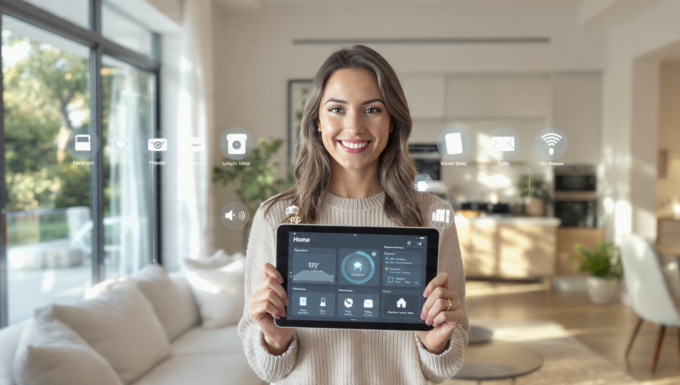
This interoperability eliminates the need for dozens of proprietary apps on your smartphone. Instead, the hub provides a “single pane of glass” to monitor your home’s health, from battery levels to real-time security status, ensuring your entire house operates as a single, coordinated team.
Local Processing for Instant Reliability
A major shift in 2026 is the move toward Local Control, where the smart hub processes commands within the home rather than relying on the cloud. This results in near-instant response times, removing the “round-trip” delay that once plagued earlier smart home setups.
Local processing also provides a critical layer of reliability; your motion-activated lights and security alarms will continue to function even if your internet connection fails. This ensures that your home remains smart, safe, and responsive 24/7, providing professional-grade performance.
Advanced Automation and Predictive Intelligence
Smart hubs allow for complex, multi-device “Scenes” that standalone gadgets cannot achieve. For example, a “Good Morning” routine can simultaneously raise the blinds, adjust the thermostat, and start the coffee maker the moment your bedside sensor detects movement.
In 2026, these hubs have moved into Predictive Intelligence, learning your daily habits to anticipate your needs. Your hub can detect when you are heading to the home office and automatically optimize the lighting and temperature for productivity before you even sit down at your desk.
Energy Optimization and Resource Management
Centralizing your home tech through a hub is the most effective way to reduce energy consumption and lower utility bills. The hub coordinates high-energy appliances to run during off-peak hours and manages your HVAC system based on real-time occupancy and weather data.
By monitoring the power draw of every connected device, the hub provides actionable insights into your household’s carbon footprint. It can even sync with your solar panels to ensure you are using self-generated power whenever possible, making your home as sustainable as it is smart.
Enhanced Security and Peace of Mind
Security is where the smart hub truly shines as a central command center. It integrates cameras, smart locks, and sensors into a unified “fortress” mode, providing high-fidelity alerts that distinguish between a delivery person and a potential security threat.

If a leak is detected in the basement, the hub can automatically shut off the main water valve and alert your phone instantly. This proactive coordination provides a level of protection and peace of mind that isolated, standalone security gadgets simply cannot match.