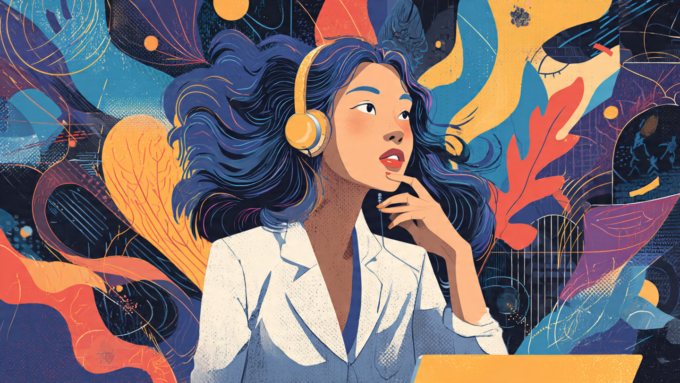


The transition from viewing artificial intelligence as a futuristic curiosity to a trusted office colleague has been remarkably swift. Just a few years ago, delegating a significant professional task to an algorithm felt like a risk; today, it is often seen as a standard best practice for ensuring accuracy.
Trust in digital tools is not built overnight but is instead the result of consistent, repeated reliability across thousands of small interactions. As people see AI successfully manage their schedules, summarize their meetings, and catch their errors, the psychological barrier to collaboration begins to dissolve.
✨ AI Insight: In 2026, trust has moved from being based on simple accuracy to “calculative-based trust,” where users weigh the consistent gains in efficiency against the diminishing risks of manual error. This maturing relationship allows AI to act more as a partner that amplifies human expertise rather than just a tool that follows instructions.
The Foundation of Consistent Performance
The primary driver of professional trust is the predictability of the outcome. When a worker uses an AI tool to analyze a dataset or draft a report, they are looking for a baseline of quality that matches or exceeds their own manual efforts.
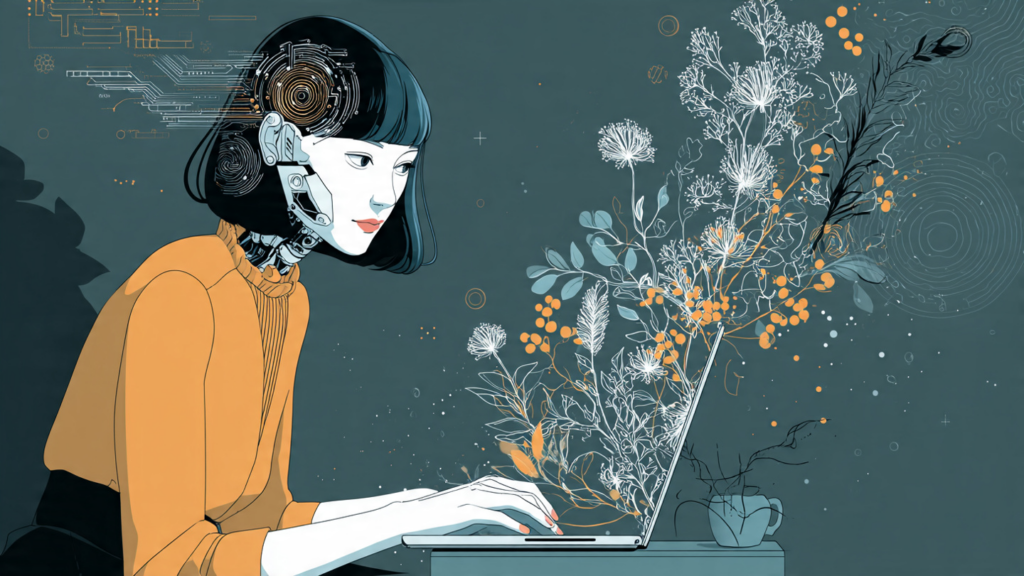
Over time, the absence of “random errors”—the kind humans make when they are tired or distracted—builds a sense of cognitive security. Because the technology does not suffer from fatigue, its performance remains stable regardless of the workload, creating a reliable foundation for the rest of the day.
This consistency allows professionals to offload the more mechanical aspects of their roles with confidence. When the “how” of a task is guaranteed by the system, the human user can focus entirely on the “what,” leading to a more streamlined and less stressful work environment.
Transparency and the “Glass Box” Effect
One of the historical barriers to trusting AI was the “black box” nature of its decision-making, where users could see the result but not the logic. Modern systems have addressed this by providing greater explainability, showing the data points and reasoning behind a specific suggestion.
This transparency allows users to audit the AI’s work in real-time, which ironically increases trust even when the system is not perfect. By understanding the boundaries and limitations of the tool, professionals can “calibrate” their trust, using the AI for what it does best while maintaining oversight.
When the logic of a tool is visible, it feels less like an opaque mystery and more like a transparent teammate. This clarity reduces skepticism and encourages deeper integration into high-stakes workflows where accountability is a primary concern.
The Role of Anthropomorphism and Familiarity
The way AI presents itself—through natural language, a helpful tone, and intuitive interfaces—plays a significant role in how quickly it is accepted. Systems that communicate in a human-like way reduce the “psychological distance” between the user and the technology.
Familiarity also builds trust through the accumulation of positive experiences over months and years. As AI becomes a standard feature in familiar browsers and office suites, its presence is no longer questioned but is instead expected as a part of the professional landscape.
This social influence, where seeing colleagues and industry leaders successfully use AI, further reinforces its credibility. Trust becomes a shared cultural norm within the organization, making the adoption of new automated processes feel like a natural evolution rather than a forced change.
Verification as the New Standard
In 2026, the focus of work has shifted from “creating from scratch” to “verifying and refining.” Professionals trust AI to do the heavy lifting of the first draft or the initial data crawl, knowing that their value lies in the final review and ethical judgment.
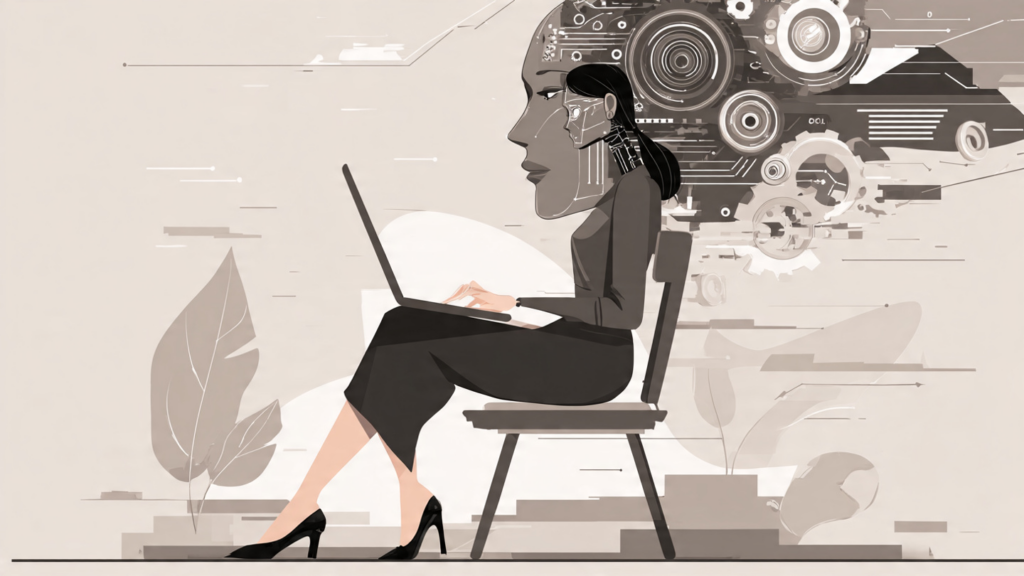
This “human-in-the-loop” approach ensures that while the AI is trusted to perform the task, the ultimate responsibility remains with the person. This balance prevents over-reliance while still capturing the massive efficiency gains that automation provides.
By acting as an orchestrator of intelligent systems, the modern worker uses trust as a strategic tool. They trust the AI to handle the scale and speed of the information, while the AI “trusts” the human to provide the necessary context and creative direction.
Why It Matters
Trust is the essential currency of the modern workplace; without it, even the most advanced technology becomes a source of friction rather than a benefit. When people trust their AI tools, they are able to work at a higher level of complexity without a corresponding increase in stress or effort.
This partnership allows for a more resilient workforce that can adapt to rapid changes in the global economy. By delegating the routine and the predictable, we preserve our uniquely human strengths—empathy, ethics, and strategic vision—for the tasks that truly require them.
The ultimate goal of building trust in AI is to create a more harmonious relationship between people and their digital environment. As these tools become more reliable and transparent, they stop being “technology” and simply become the way we work, allowing us to achieve more than we ever could alone.