
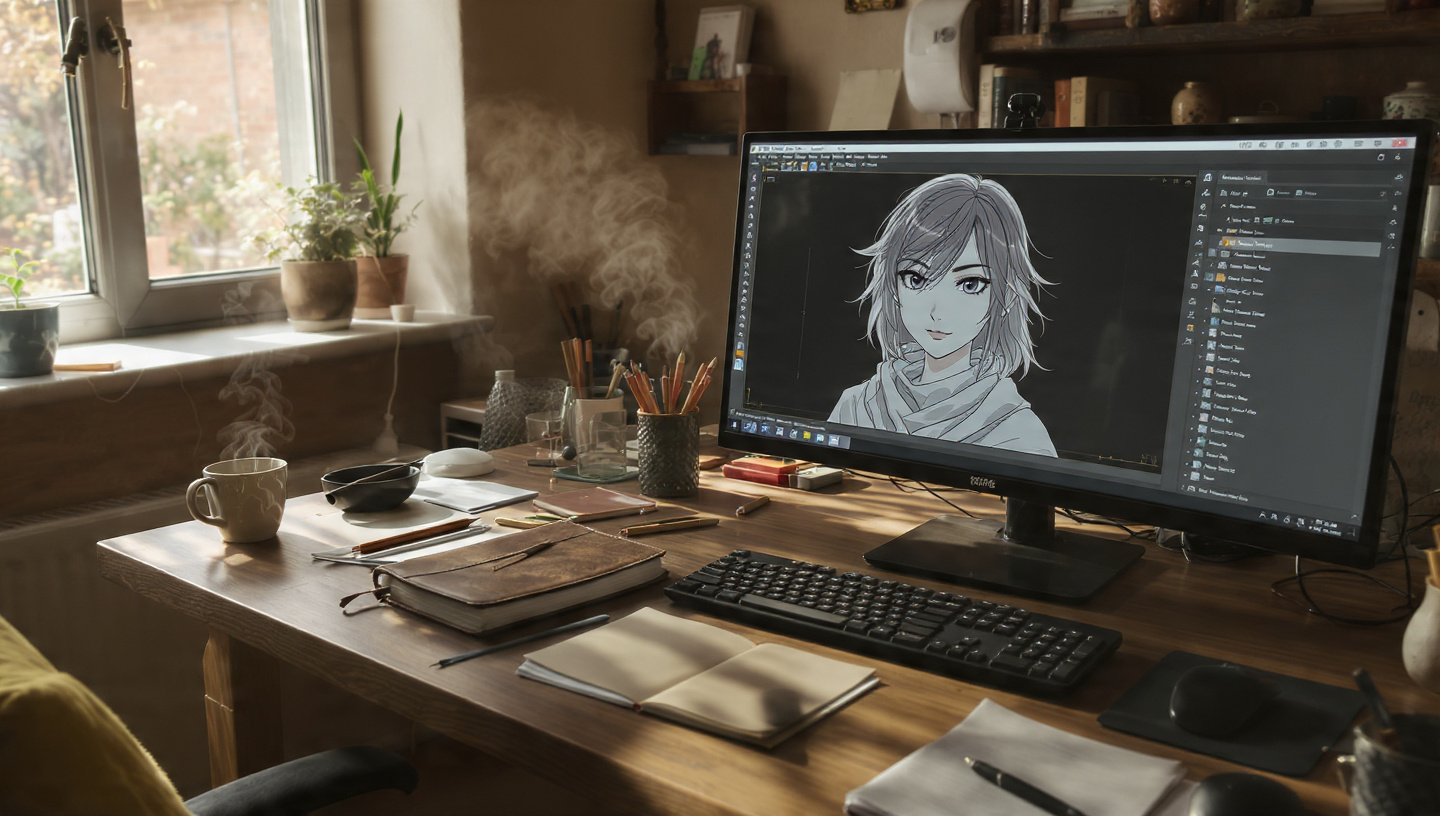
For decades, the creative process was defined by a specific trade-off: the more ambitious the vision, the more manual labor was required to execute it. Bringing a complex idea to life meant navigating a long “technical gap” of mastering brushes, keyframes, or sound frequencies.
By 2026, this dynamic has been fundamentally transformed. Artificial intelligence has transitioned from a series of experimental tools into an essential partner that lives within the creative workflow. This shift isn’t about the technology “having” ideas; it’s about the technology removing the friction that once sat between a human concept and its physical or digital reality.
✨ AI Insight: In 2026, the creative process has moved into an era of “Agentic Collaboration.” AI tools no longer just wait for a prompt; they function as active digital coworkers that can manage entire sub-tasks—like maintaining character consistency across a video or color-grading 500 images—allowing creators to focus entirely on the “soul” of their work.
1. Dissolving the Friction of the “Blank Page”
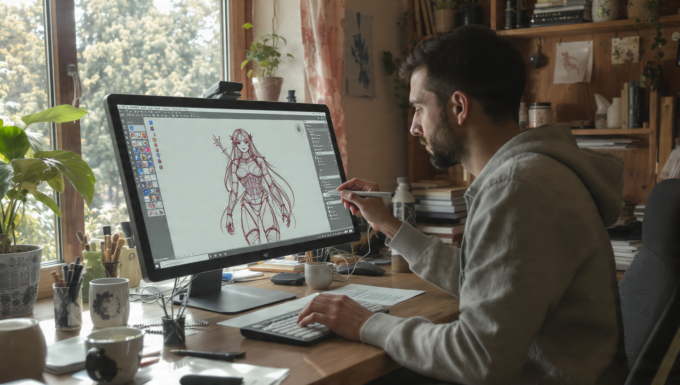
The most daunting part of creativity has always been the beginning. AI has become a primary tool for rapid ideation, acting as an infinite brainstorming partner. In 2026, creators use AI to generate hundreds of mood boards, headline variations, or rough sketches in minutes rather than days.
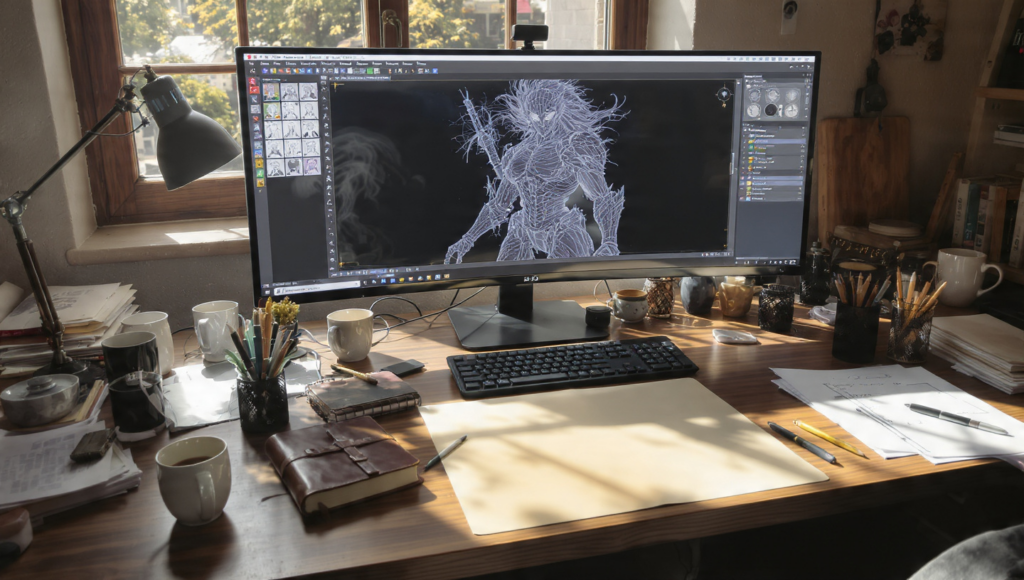
- Parallel Exploration: Instead of pursuing one idea at a time, creators can now explore ten different directions simultaneously.
- The “Both/And” Principle: AI provides the volume of possibilities, while the human provides the strategic selection and emotional nuance.
- Reduced Ego Filtering: Teams can use AI to generate neutral concepts, helping to avoid “groupthink” and status-based biases during the early planning stages.
2. Temporal Compression of Technical Skills
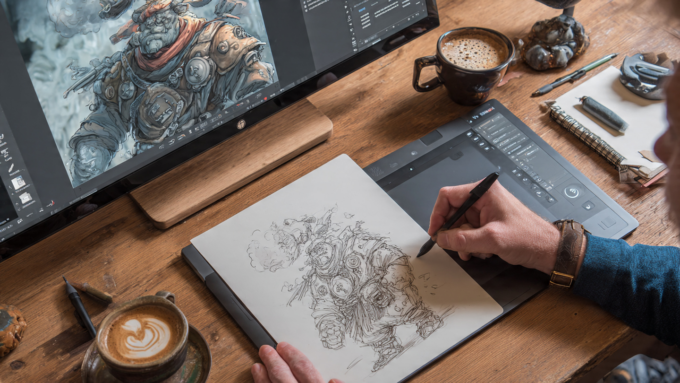
One of the most revolutionary aspects of AI in 2026 is the externalization of technical skill. For millennia, manifesting a mental image required years of motor-skill acquisition (perspective, anatomy, color theory). AI has effectively compressed this timeline.
- Democratized Tools: Solo creators and small teams can now produce cinematic-quality video and high-fidelity 3D assets that previously required a Hollywood-sized budget.
- The Shift to Curation: The primary skill of the artist is shifting from “execution” to “curation.” The artist’s value is now found in their taste, their vision, and their ability to guide the machine toward an authentic result.
3. Scaling Personalization Without Burnout
In a digital world that demands constant new content, the pressure on creative teams to produce “more” often led to burnout. AI has become essential because it handles the mechanical scaling of a project.
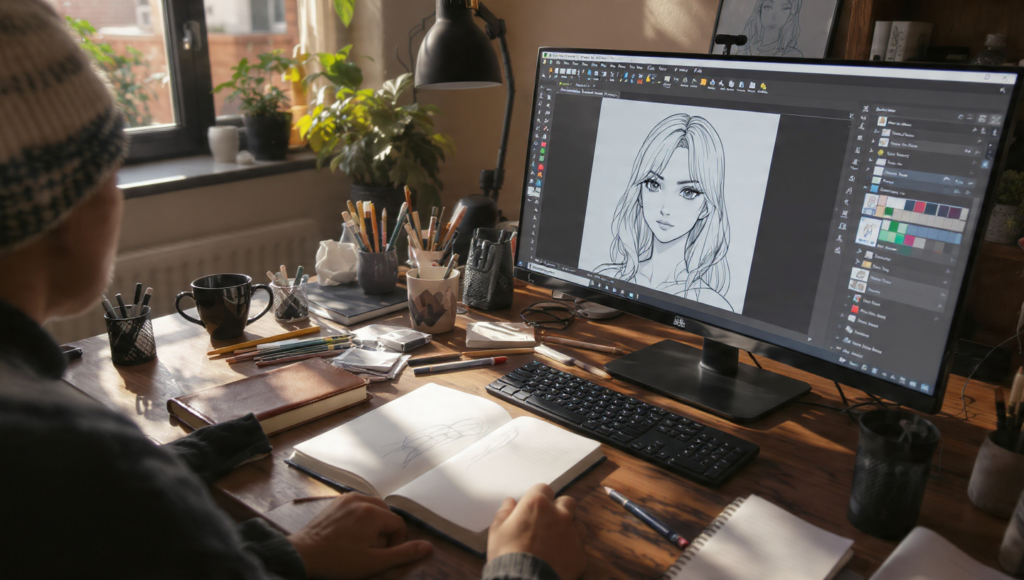
- Automated Adaptation: A single core design can be automatically reformatted into dozens of platform-specific assets (social posts, banners, video clips) that maintain brand consistency.
- Hyper-Personalization: AI allows brands to tailor visuals and messaging to individual audience segments in real-time, something that was logistically impossible with manual workflows.
4. Unlocking “Impossible” Aesthetics
AI allows creators to explore Adversarial Creativity—territories that neither a human nor a machine would discover alone. By mixing unrelated datasets or simulating complex physics, AI can visualize “impossible” combinations of lighting, texture, and perspective.
- Style Synthesis: Creators use style-transfer algorithms to blend historical art movements with modern digital aesthetics.
- Generative Design: Architects and product designers input constraints (like weight or material cost), and AI generates thousands of structurally sound, organic forms that a human mind might never have intuited.
Why It Matters
The integration of AI is ultimately a return to human-centric creativity. By delegating the mechanical and repetitive “grunt work” to the machine, the modern creator is reclaiming the mental “white space” needed for deep thinking, cultural empathy, and strategic innovation.
In 2026, the most successful creators are those who view AI not as a competitor, but as the “electricity” that powers their studio. The goal is to make the technology so seamless that it disappears, leaving only the story, the feeling, and the human spark that the audience truly connects with.