

The shift toward artificial intelligence in the modern marketing department has moved past the era of experimentation. For most organizations in 2026, the adoption of these tools is no longer a futuristic goal but a practical necessity for staying competitive in an environment that demands unprecedented speed and precision.
Marketing professionals are turning to AI primarily to address the persistent gap between increasing data complexity and limited human bandwidth. As digital touchpoints become more interconnected, the ability of a team to manually track every variable—from shifting social sentiment to evolving search patterns—has reached a natural ceiling.
✨ AI Insight: In 2026, AI has transitioned from a standalone destination into a foundational infrastructure that lives inside existing workflows. This shift allows marketing teams to move beyond simple task automation toward “agentic” systems that proactively coordinate campaigns and content schedules without human prompts.
Solving the Crisis of Information Overload
The average marketing department today generates more performance data in a single afternoon than it can realistically analyze in a month. This “data deluge” often leads to decision paralysis, where teams have too much information to make a clear choice on which creative direction or channel to prioritize.
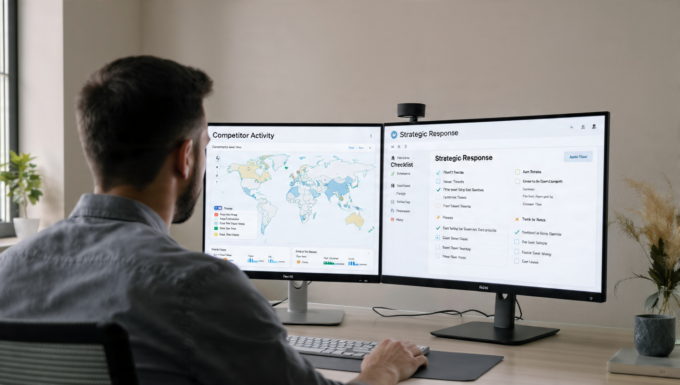
AI tools serve as a high-fidelity filter, distilling massive datasets into actionable intelligence that highlights specific risks and audience opportunities. This allows marketers to operate with a transparent view of their market, ensuring that strategy is based on live evidence rather than outdated intuition.

By turning raw metrics into clear narratives, these systems empower every level of the organization to act with confidence. The technology handles the “crunching” of thousands of data points, while the people focus on the creative and ethical implications of the findings.
Achieving Scale Without Increasing Complexity
Historically, growing a marketing operation meant a linear increase in administrative overhead—more people to manage more posts, more ads, and more reporting. AI tools break this link by allowing organizations to scale their creative output while keeping their core operations lean and manageable.
Intelligent automation handles the repetitive “hand-offs” between different creative stages, such as automatically resizing a visual for five different platforms or updating a project tracker once a draft is approved. This prevents the operational “bloat” that often slows down maturing marketing teams.
The result is a more agile marketing model that can pivot rapidly in response to market disruptions. Scaling is no longer about adding more layers of management, but about optimizing the digital architecture that supports the existing creative talent.
Meeting the Demand for Invisible Personalization
Consumer expectations have evolved to a point where generic, one-size-fits-all campaigns are often seen as an oversight. Marketers are turning to AI to provide a level of individual attention that would be impossible to achieve through manual efforts or simple segmentation alone.
Personalization engines analyze individual customer journeys in real-time to tailor email subject lines, product recommendations, and website experiences. This “invisible” personalization ensures that every customer feels understood, which directly impacts long-term brand loyalty and conversion rates.
The technology manages the billions of potential combinations of data to find the “right” message for the right person. This allows brands to maintain a boutique-level feel even as they serve a global audience of millions across dozens of digital channels.
Redefining Strategy Through Predictive Insights
Marketing strategy has traditionally been shaped by hindsight—looking at what worked last month to plan for the next. AI changes this dynamic by modeling outcomes before a campaign even launches, shifting the strategy “upstream” to reduce dependency on retrospective reporting.

By assessing historical sales, market trends, and even external factors like seasonality, AI can forecast future demand and help businesses plan their inventory and campaigns more effectively. This allows marketers to be proactive, identifying potential customer churn or emerging trends before they fully manifest.
Trusting a system to monitor these variables 24/7 provides a level of cognitive security for marketing leadership. It ensures that while they are focused on the creative vision, the technology is reliably guarding the performance and health of the overall marketing engine.
Why It Matters
The move toward AI in marketing is ultimately a move toward a more human-centric profession. By delegating the mechanical and repetitive aspects of the job to software, we are reclaiming the time needed for the tasks that only humans can do: empathizing, innovating, and building authentic relationships.
Teams that embrace these tools are not just becoming more efficient; they are becoming more resilient. In a world defined by rapid digital change, the ability to offload the routine to technology is the ultimate competitive advantage. It allows a marketing team to stay focused on its “why” while the AI handles the “how.”
As we move further into 2026, the distinction between “digital marketing” and “AI marketing” will continue to fade. Every successful brand will be an AI-supported brand, defined by its ability to leverage machine intelligence to amplify human creativity and drive meaningful, long-term growth.