
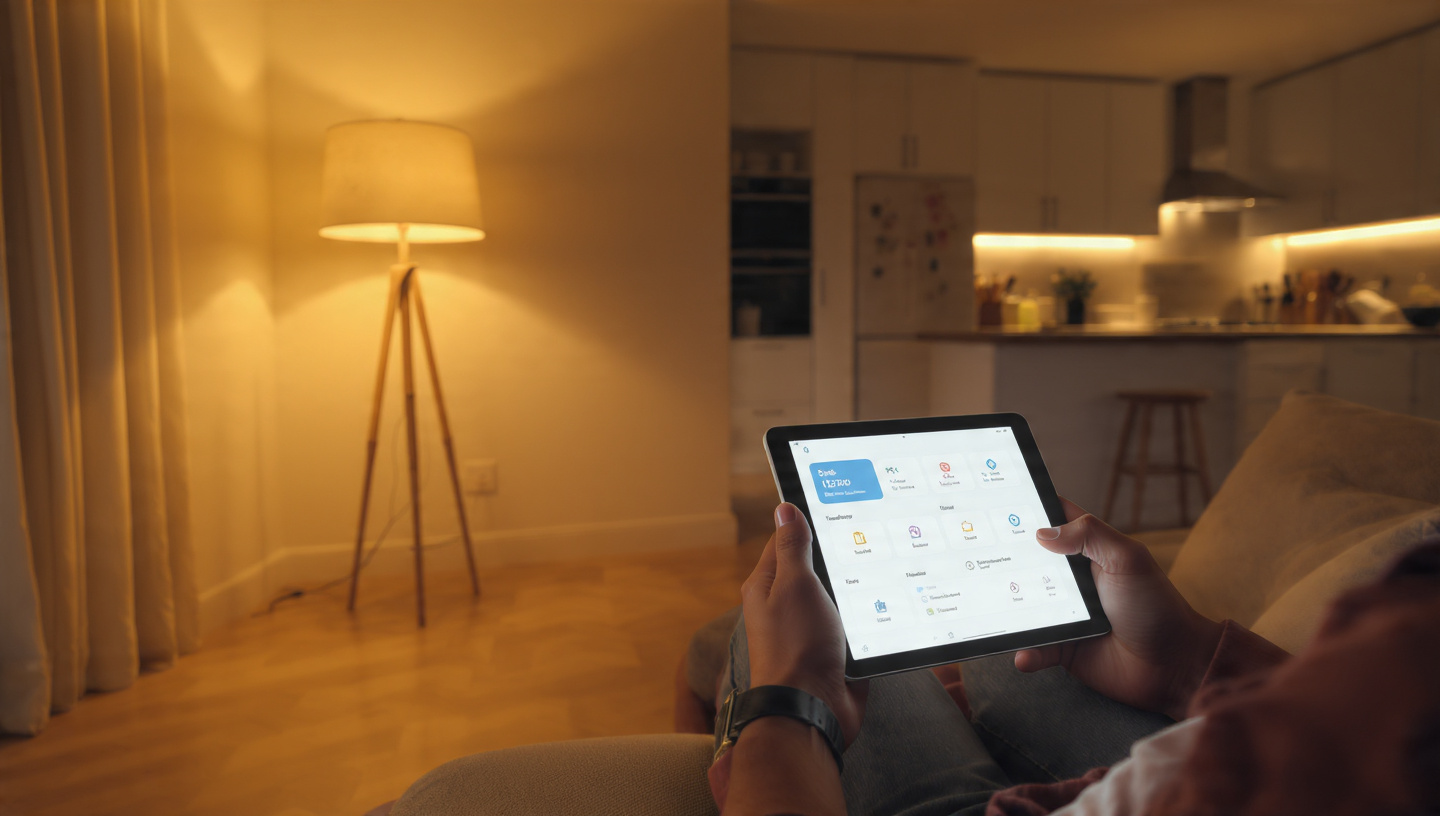
The hallmark of a truly sophisticated smart home in 2026 is not the presence of complex gadgets, but the absence of manual effort. We have moved past the era of “remote-controlled” homes where users had to navigate clunky apps to perform basic tasks. Today, effortless lighting is defined by its ability to work autonomously in the background, anticipating your needs before you even think to reach for a switch.
This shift toward “invisible” technology focuses on the experience rather than the device. When lighting is designed correctly, it becomes a seamless part of the architecture, responding to your biological rhythms and physical movement. The goal is to create a living environment that supports your lifestyle with zero friction, allowing the technology to disappear while the benefits remain front and center.
✨ AI Insight: Effortless lighting in 2026 relies on “agentic” automation that learns your specific household flow, eliminating the need for manual programming or voice commands.
The Power of Presence-Based Automation
The foundation of an effortless lighting setup is the transition from manual control to occupancy-based responsiveness. In 2026, high-precision presence sensors have replaced basic motion detectors, allowing the home to differentiate between a person sitting still and an empty room. This ensures that lights remain active during a quiet reading session but extinguish the moment you depart.
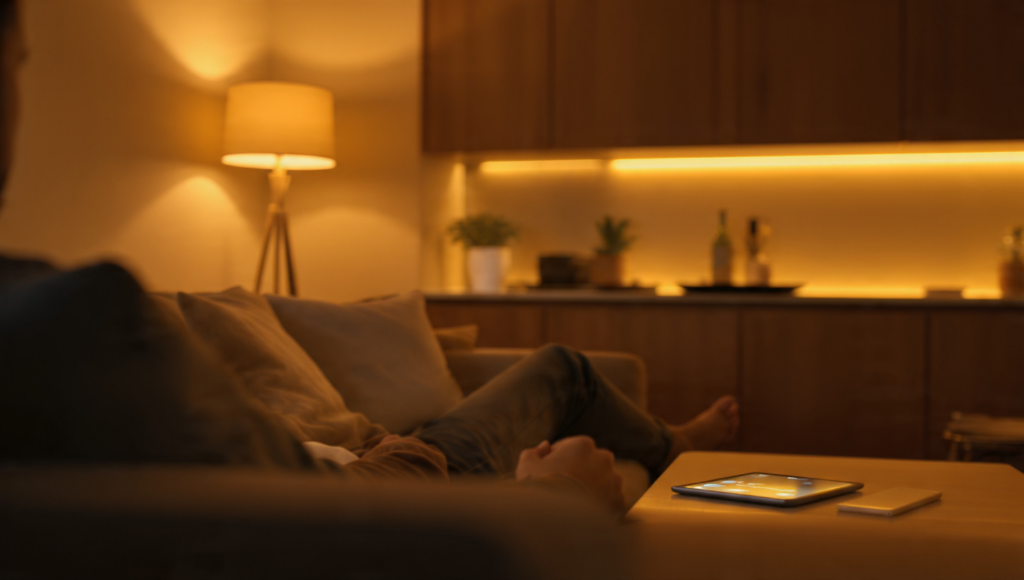
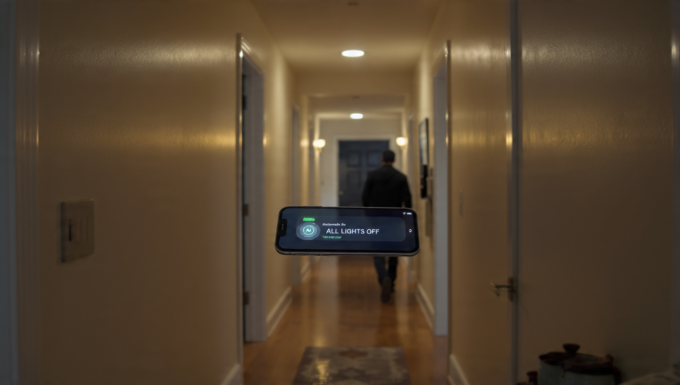
This level of automation is particularly transformative in transition areas like hallways, laundry rooms, and walk-in closets. In these spaces, the physical act of searching for a switch is completely eliminated, allowing you to move through your home with a natural, hands-free flow. The lighting becomes an intuitive guide, illuminating the path forward and fading behind you as you go.
Furthermore, these sensors are now intelligent enough to adjust their response based on the time of day. During the night, a sensor in the bathroom might trigger a soft, low-intensity amber glow to prevent jarring the senses, while the same sensor provides full brightness during the afternoon. This adaptive behavior makes the home feel like it possesses its own form of environmental empathy.
Circadian Rhythms and Biological Synchronization
A home feels truly effortless when it aligns with your internal biological clock without requiring any conscious input. Human-centric lighting (HCL) is no longer a luxury feature but a standard expectation in 2026. These systems use tunable white technology to automatically mirror the natural progression of the sun from dawn until dusk.
In the morning, the system gently transitions the home into a crisp, cool white spectrum that suppresses melatonin and prepares the brain for the day’s tasks. As evening approaches, the tone shifts seamlessly into a warm, candlelight yellow. This process happens so gradually that the inhabitants often don’t notice the change, yet they experience the benefits of improved mood and deeper sleep.
By automating this biological synchronization, the home office becomes a high-performance zone and the bedroom becomes a dedicated sanctuary. The effort of “setting the mood” is removed from the user’s responsibility, as the system consistently provides the optimal light temperature for the current hour. It is a health-focused automation that operates entirely in the background of daily life.
Seamless Integration Through Matter and Universal Standards
The technical friction that once made smart homes feel like a second job has been largely solved by the universal adoption of the Matter standard in 2026. Effortless lighting means that a bulb from one manufacturer can talk to a sensor from another without the need for a complex bridge or multiple accounts. This interoperability allows for a unified experience where everything “just works.”
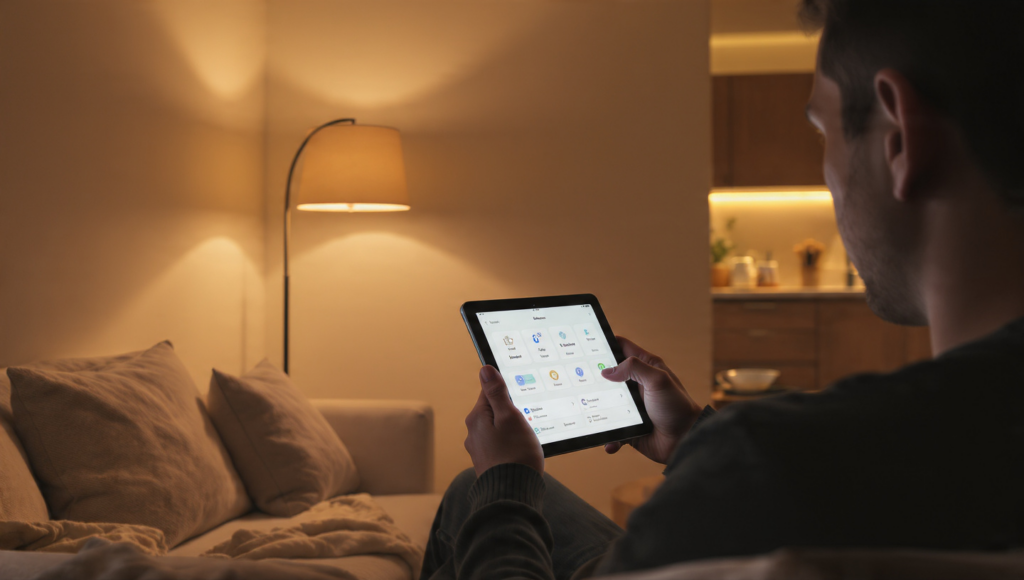
Users no longer have to worry about whether a new fixture will be compatible with their existing voice assistant or smart hub. The installation process has been reduced to a simple QR code scan, immediately integrating the device into the home’s established routines. This plug-and-play simplicity ensures that the technology serves the user, rather than the other way around.
This connectivity also allows lighting to collaborate with other categories, such as smart shades and thermostats. For example, if the shades are closed to block out the midday heat, the smart lighting can automatically compensate for the loss of natural light. This cross-device coordination creates a holistic environment that manages itself, providing a truly hands-off living experience.
Predictive Maintenance and System Self-Healing
In 2026, the management of a smart lighting system has become as effortless as its daily use. Modern systems feature “self-healing” capabilities where the network can automatically reroute connections if a specific hub or bulb goes offline. This prevents the traditional frustration of a “device unresponsive” error message and ensures that your automations remain reliable.
Additionally, predictive maintenance features provide proactive alerts before a component fails. Instead of discovering a dead bulb in the middle of a dinner party, the system notifies you weeks in advance when a unit is nearing the end of its lifespan. This allows for planned maintenance at your convenience, rather than reactive troubleshooting during busy moments.
This diagnostic transparency removes the guesswork from home maintenance. The system monitors its own health, power consumption, and connection strength, presenting a simple “All Systems Normal” status to the homeowner. By taking over the logistical management of the hardware, the smart home ensures that the only thing the user has to do is enjoy the atmosphere.
Creating Atmosphere with Invisible Architecture
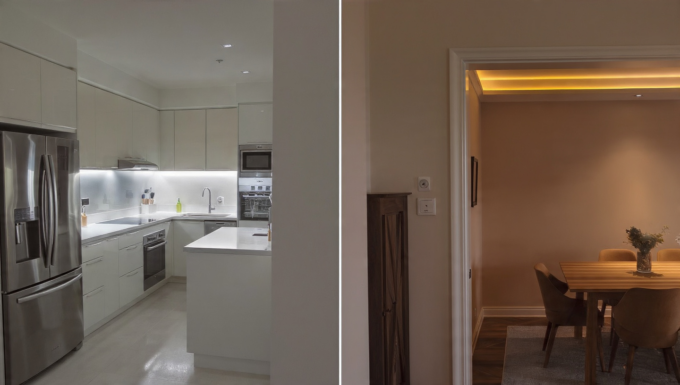
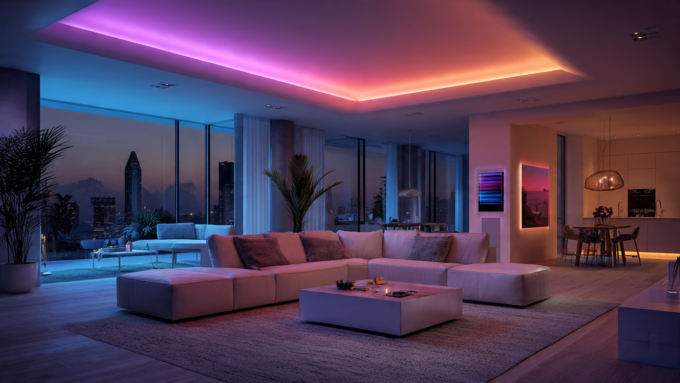
The most sophisticated smart homes in 2026 utilize “invisible lighting” to create an atmosphere that feels natural rather than technical. This involves hiding LED sources within ceiling coves, under cabinets, or behind architectural panels. The goal is to see the effect of the light—the soft wash on a wall or the glow under a kitchen island—without seeing the fixture itself.
This design philosophy contributes to a minimalist, uncluttered aesthetic that reduces visual noise and promotes a sense of calm. When light is integrated into the structure of the room, it feels like an organic part of the building rather than an added gadget. It transforms the home into a sculptural space where the illumination defines the shape and purpose of every corner.
Effortless atmosphere is also achieved through pre-set “scenes” that coordinate dozens of lights across the home. With a single command like “Dinner Party” or “Evening Relax,” every zone in the house adjusts its brightness and temperature simultaneously. This orchestration removes the need for manual fine-tuning, allowing you to instantly change the entire personality of your home to suit the occasion.
Reclaiming Time and Focus Through Automation
Ultimately, the goal of effortless smart lighting is to return time and mental energy to the homeowner. By automating thousands of micro-decisions every day, the system reduces “decision fatigue” and allows you to focus on more meaningful tasks. You no longer have to think about whether you left the garage light on or if the porch light is active; the home has already handled it.
The cumulative effect of these small efficiencies is significant. Over the course of a year, the average smart home user in 2026 saves dozens of hours that were previously spent on mundane home management. This is the true definition of effortless technology—a system that makes your life easier by requiring less of your attention, not more.
As we look toward the future, the trend of “less is more” will continue to dominate. The most advanced lighting systems will be the ones that are so well-integrated that you forget they are even there. By prioritizing the human experience and automating the technical details, smart lighting has transformed the modern house into a truly supportive and intuitive home.