
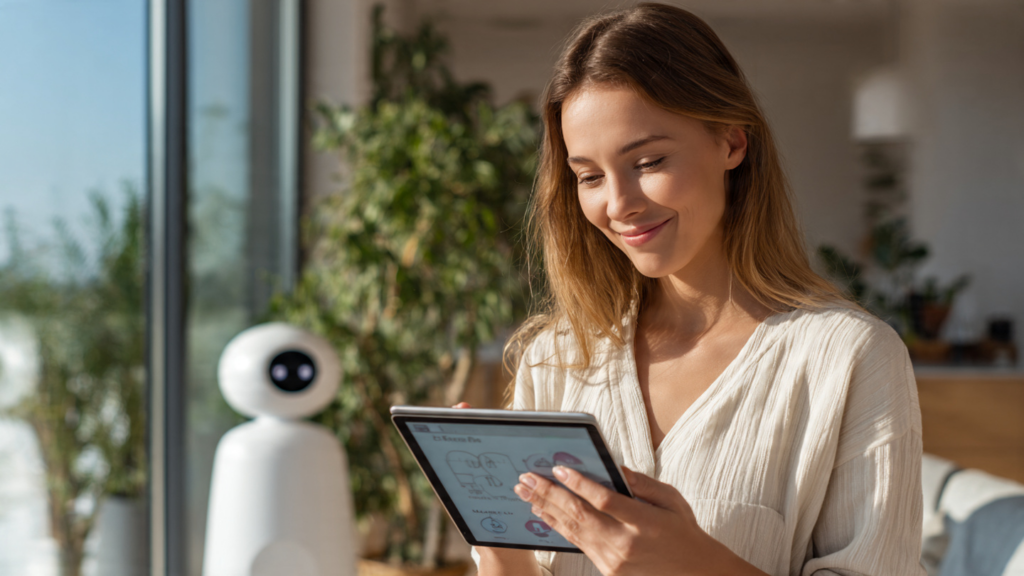
In 2026, the concept of a smart home has shifted from a flashy collection of gadgets to a deeply integrated, “invisible” ecosystem. Modern technology is no longer an add-on; it is becoming part of the home’s architecture, designed to blend into the interior while quietly managing the logistics of daily life.
The primary goal of smart tech in today’s home is to reduce “decision fatigue.” By automating repetitive tasks—like adjusting the blinds for afternoon sun or preheating the oven based on a digital recipe—the home becomes a responsive partner that anticipates your needs, allowing you to focus on work, family, and wellness.
✨ AI Insight: In 2026, the rise of “Agentic AI” allows homes to function autonomously, making real-time adjustments to water pressure or energy usage without the need for manual programming or voice commands.
Aesthetic Integration and “Invisible” Tech
One of the most significant shifts in 2026 is how technology fits visually into modern interiors. We have moved past the era of bulky sensors and visible wires. Today, smart tech is designed to be “invisible,” integrated into light fixtures, mirrors, and even furniture.
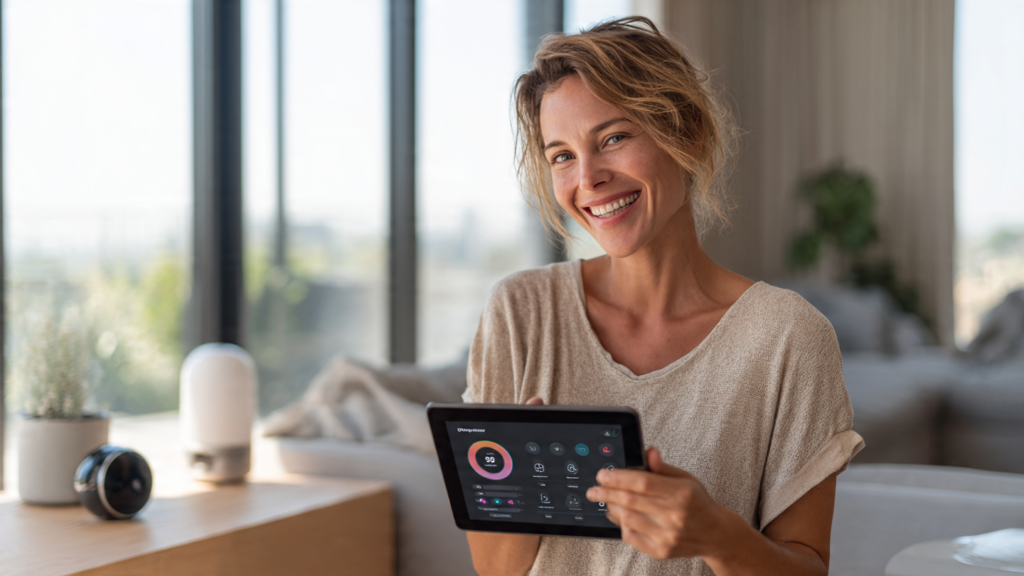
This design-first approach ensures that the technology supports the home’s aesthetic rather than dominating it. For example, Samsung’s “Timeless Frame” displays act as massive art pieces when not in use, and smart switches are often hidden behind fabric or wood finishes to maintain a minimalist look.
By blending into the fabric of the home, these devices provide a high-tech experience without the high-tech appearance. It allows homeowners to maintain a warm, natural environment while still enjoying the benefits of a fully connected and responsive living space.
Supporting the “Work-From-Home” Lifestyle
With hybrid and remote work being a permanent fixture in 2026, smart technology has evolved to optimize the professional environment within the home. Smart offices now use AI to monitor your posture, air quality, and lighting levels to ensure peak productivity.
Circadian rhythm lighting in the office adjusts its color temperature throughout the day—shifting from a crisp, blue-toned white in the morning to a soft, warm amber in the afternoon. This bio-integration helps maintain focus and prevents the “digital burnout” common in modern work life.
Furthermore, smart speakers and AI assistants now function as professional coordinators. They can manage your calendar, prioritize your emails, and even silence household appliances like the dishwasher or robot vacuum during a scheduled video call, creating a seamless professional bubble.
Elevating Wellness with Smart Bathrooms and Spas
The bathroom has been reimagined in 2026 as a private wellness sanctuary, utilizing smart technology to deliver personalized skincare and relaxation treatments. AI-powered showers can now adjust water chemistry and dispense tailored skincare ingredients based on a real-time skin analysis.
Smart mirrors equipped with contactless sensors analyze your hydration levels and sleep quality as you get ready in the morning, offering personalized wellness insights. This proactive health monitoring turns a daily routine into a sophisticated health check-up.
This focus on wellness extends to touchless toilets and automated aromatherapy systems that adjust the scent and lighting of the room based on your mood or the time of day. It is a level of personalized care that transforms the home into a space for both physical and mental recovery.
The Sustainable, “Net-Zero” Home Connection
Perhaps the most practical way smart tech fits into the modern home is through its contribution to sustainability. In 2026, homes are actively participating in the power grid, using AI to optimize energy consumption and reduce the household’s carbon footprint.
Smart energy monitors coordinate with solar panels and home batteries to run high-energy appliances when electricity is cheapest or most abundant. This “Grid Interaction” can reduce annual utility bills by up to 40%, making the smart home a financially savvy investment.
By turning sustainable living from a theoretical goal into a daily, automated reality, smart technology has become a cornerstone of modern residential design. It provides a lifestyle that is not only more convenient and luxurious but also deeply aligned with the global push for greener living.