

The integration of artificial intelligence into the business world was once synonymous with large-scale infrastructure overhauls and specialized data science teams. For many organizations in 2026, that barrier has vanished, as the technology has transitioned from a complex development project into a standard, pre-built utility.
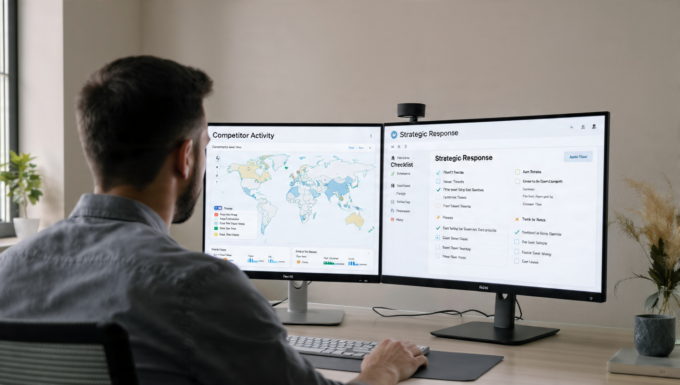
Businesses are now leveraging AI through interfaces they already understand, such as email clients, project management boards, and simple spreadsheets. By adopting tools that require zero coding or technical training, even small teams can implement sophisticated automation that handles the logistical weight of their operations. This shift toward “plug-and-play” intelligence allows companies to function with unprecedented agility without the need for a dedicated IT department.
✨ AI Insight: In 2026, the rise of “invisible AI” means that many businesses are utilizing machine learning as a default background layer in their existing software. This transition allows non-technical users to benefit from advanced predictive analytics and workflow automation through simple natural language commands rather than complex programming.

Leveraging Pre-Built Intelligence in Everyday Tools
The most common way businesses bypass technical complexity is by using AI features that are already embedded in their daily software stack. Modern communication platforms, for instance, now include built-in assistants that can summarize long discussion threads, draft replies, and automatically set reminders based on the context of a conversation.
These features require no setup or configuration; they are simply part of the user experience. By utilizing these ambient tools, employees can offload the repetitive mental labor of information retrieval and organization, allowing them to move through their workday with significantly less administrative friction.
This “built-in” approach ensures that the benefits of AI are accessible to everyone, regardless of their technical background. It transforms the standard office suite into a proactive assistant that helps manage the day, rather than just a passive space for storing documents and sending messages.
The Democratization of Automation via No-Code Platforms
For tasks that require more specific workflows, businesses are turning to “no-code” automation platforms that use simple drag-and-drop interfaces. These tools allow a marketing manager or an HR professional to build their own automated systems by connecting different apps—like having a sales lead automatically trigger a personalized welcome email and a task in a project tracker.
Because these platforms use visual builders and pre-set templates, the logic of the automation is easy to follow and adjust. This removes the “middleman” of a technical team, empowering those who actually do the work to design the systems that support them.
The result is a highly customized environment that evolves alongside the business. When an operational bottleneck is identified, a team member can create a solution in minutes, ensuring that the business stays efficient without waiting for a lengthy development cycle or a large budget allocation.
Simplifying Customer Relations with Adaptive Support
Maintaining a high level of customer service used to involve complex ticket-routing systems and constant manual oversight. Modern businesses now use adaptive AI agents that can be “trained” simply by pointing them toward a company’s existing website or internal documentation.
These agents can handle up to 80% of routine inquiries—such as tracking a shipment or explaining a service plan—using the specific voice and knowledge of the brand. There is no need for a developer to write complicated decision trees; the AI learns the necessary information directly from the source material.

This ease of deployment allows even micro-businesses to offer 24/7 support that feels personal and accurate. By automating the routine, the human staff can focus on the high-priority or emotional cases that truly require a personal touch, ensuring a better experience for both the customer and the employee.
Why It Matters
Using AI without complexity is fundamentally about reclaiming time and focus. When technology is easy to adopt, it stops being an intimidating project and starts being a practical partner. This accessibility is what allows small and mid-sized businesses to compete with much larger organizations that have historically had more resources.
Reclaiming hours from administrative tasks directly impacts a team’s ability to innovate and build relationships. It moves the workday away from “managing the tools” and back toward the core mission of the business. In a world where speed and responsiveness are the ultimate advantages, the simplest solution is often the most powerful.
Ultimately, the goal of these user-friendly tools is to make the technology disappear. The most successful businesses in 2026 aren’t the ones with the most complex systems, but the ones that use the most reliable and accessible tools to support their human talent. Simplifying AI is the key to making work feel more human again.