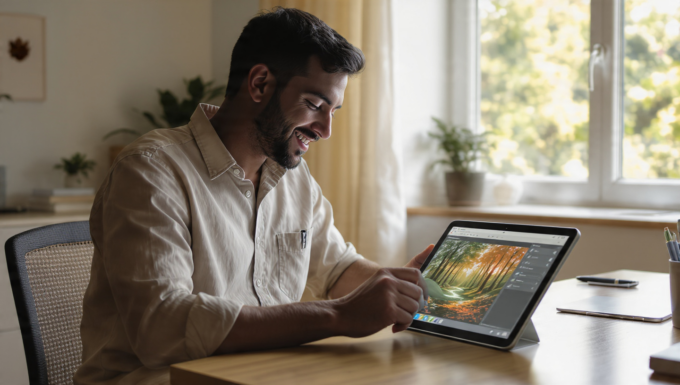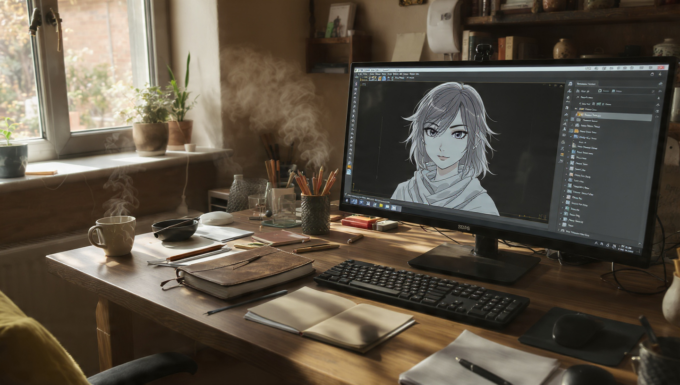

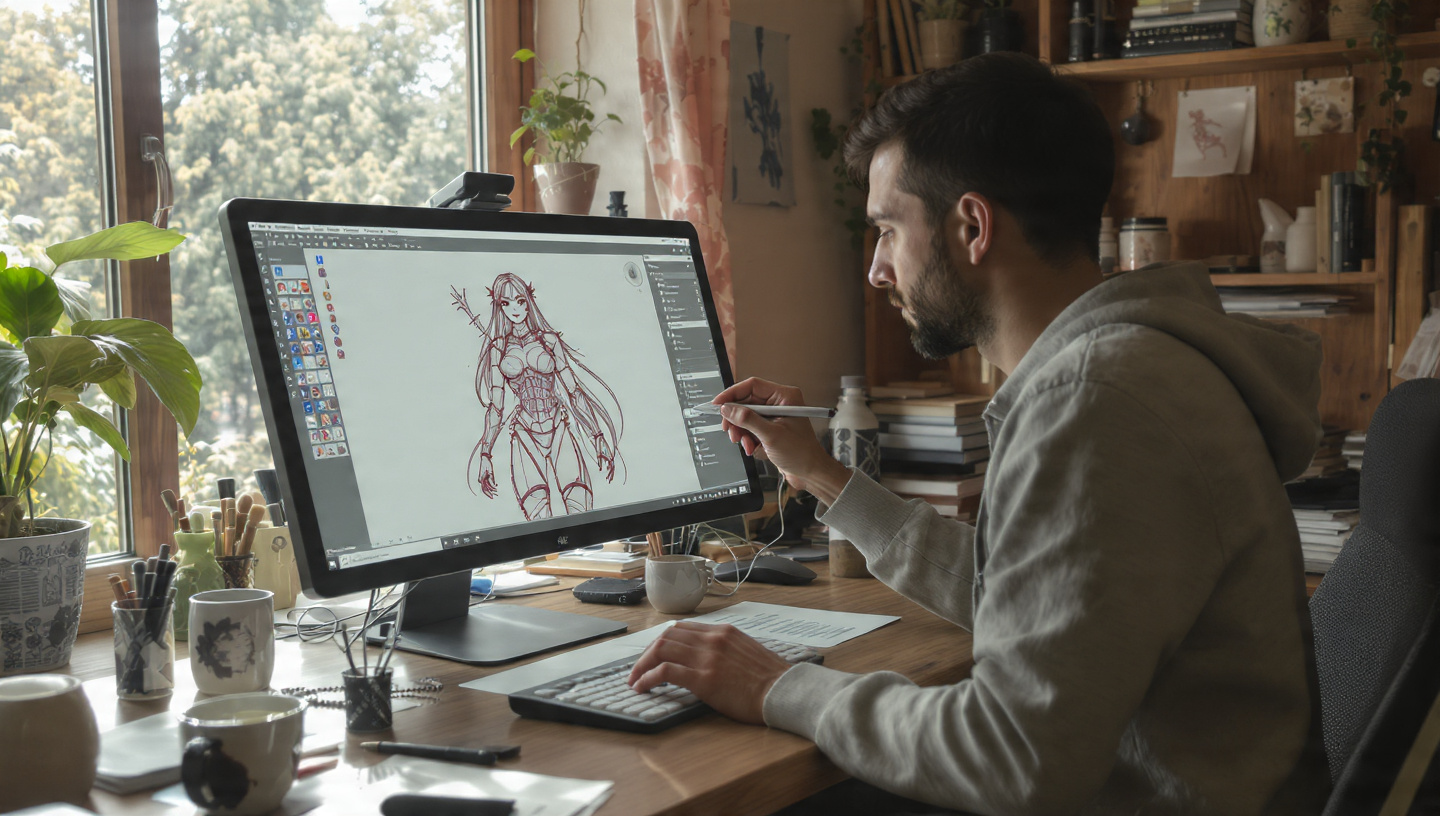
The process of translating a visual idea from the mind to a physical or digital medium has historically been a labor-intensive journey. Whether it was the technical precision required for oil painting or the steep learning curve of professional design software, the “mechanical” phase of art often moved slower than the speed of thought.
In 2026, this dynamic has shifted as artificial intelligence becomes a foundational layer in the creative process. Rather than acting as a replacement for human vision, AI tools serve as a supportive framework that handles the fundamental physics of light, color, and composition. This allows the creative journey to focus on high-level direction, turning the act of making art into an iterative dialogue between human intent and machine execution.
✨ AI Insight: Visual creativity has transitioned into an era of “multimodal collaboration,” where tools can synchronize sketches, voice descriptions, and text into a cohesive visual narrative. This allows for a more fluid creative flow, as technology now understands and adapts to the early, messy stages of human inspiration.
From Manual Drafting to Creative Curation
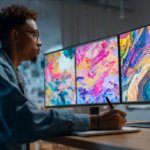
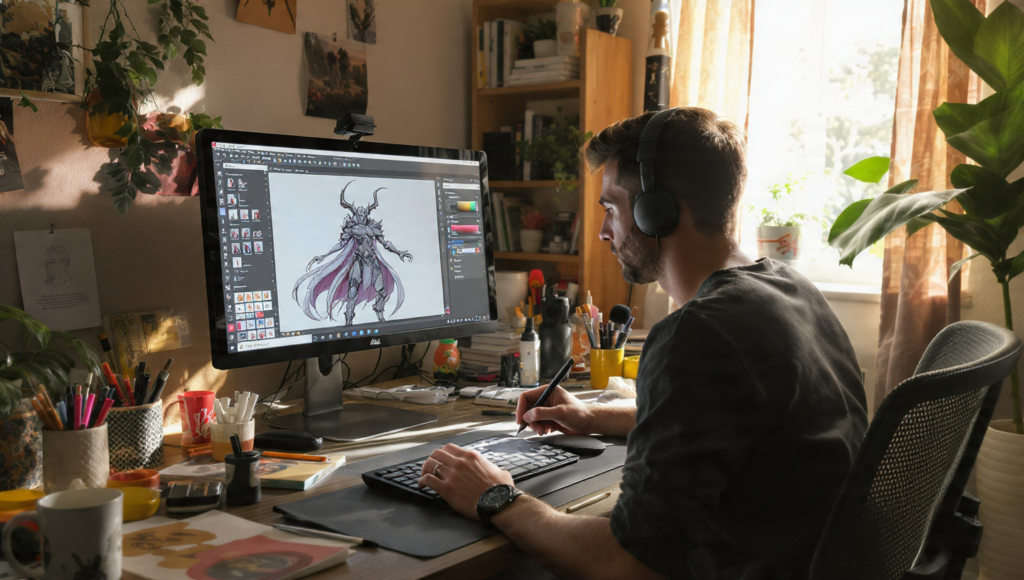
The modern creative workday is increasingly defined by the shift from manual execution to high-level curation. In the past, a graphic designer might spend hours on background removal, object masking, or basic color grading. Today, these tasks are handled by ambient AI systems that “understand” the context of a visual field, performing in seconds what once took an entire afternoon.
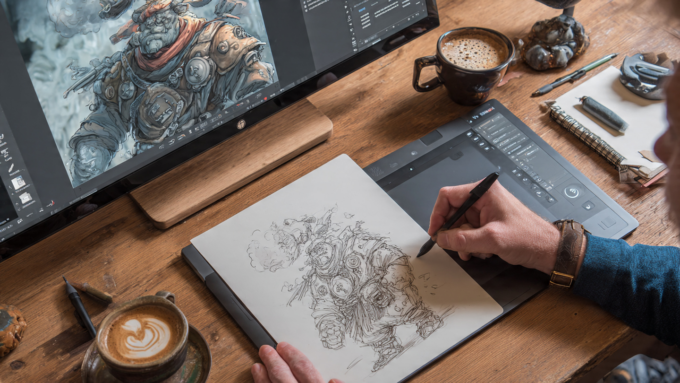
This shift allows professionals to explore dozens of creative directions in the time it previously took to produce a single draft. Instead of starting with a blank canvas, designers often begin with a series of AI-generated prototypes. They then refine, combine, and inject these foundations with the specific human nuance and emotional storytelling that algorithms cannot replicate on their own.
By offloading the repetitive “heavy lifting,” the creative process becomes more experimental. The value of the creator is no longer found in their ability to perform technical production tasks, but in their “taste”—their ability to steer the technology toward a result that feels authentically human and resonant with its intended audience.
Democratizing Professional-Grade Visual Production
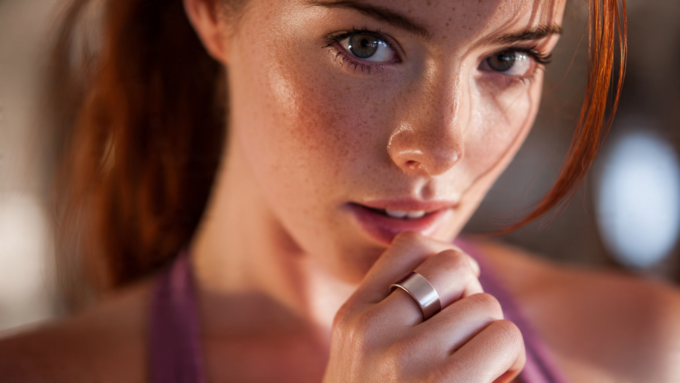
High-quality 3D modeling and cinematic video production were once the most exclusive creative fields due to the immense resources required for rendering and animation. AI-driven video tools have democratized this space, allowing independent creators to generate complex motion graphics and high-fidelity scenes from simple text or image prompts.
These tools handle the complicated physics of motion and consistency across frames, enabling a single person to produce work that previously required a specialized studio. This has led to a surge in diverse storytelling, as creators from different backgrounds can now visualize their ideas without traditional financial or technical barriers.
This democratization doesn’t just increase the volume of visuals available; it changes the nature of the visuals themselves. We are seeing a move toward more “modular” branding and campaigns, where assets can be instantly adapted for different cultural contexts or platforms without restarting the production cycle from scratch.
Creative Inspiration Through Generative Exploration
The most daunting moment for any creator is the initial block—the silence of the blank page. AI tools have become a primary source of inspiration by acting as an “infinite idea machine,” suggesting unexpected color palettes, textures, and compositions that a human might not instinctively consider.
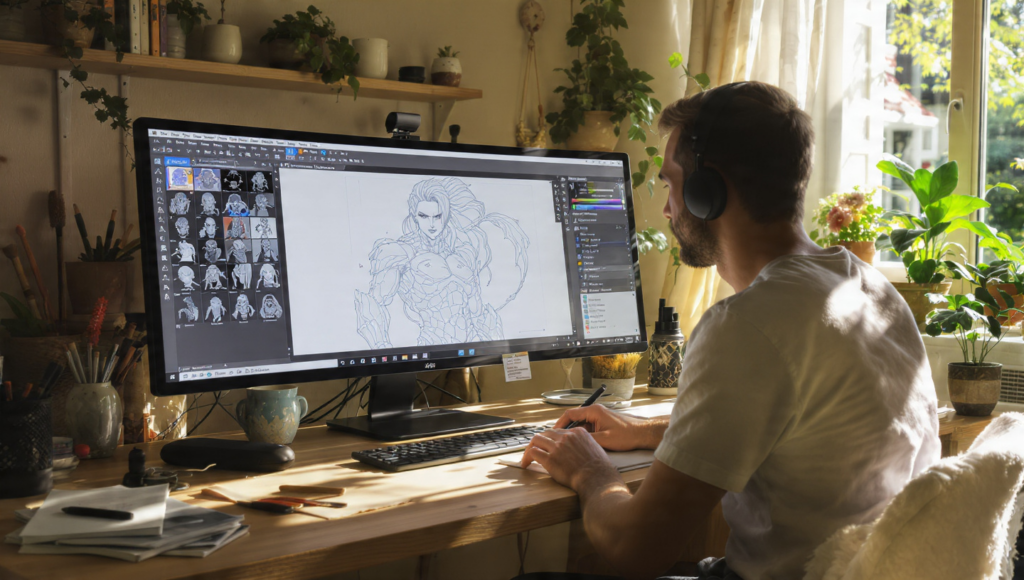
By visualizing “what-if” scenarios—such as imagining a 1920s Art Deco aesthetic applied to a modern digital interface—creators can break out of their own stylistic habits. The AI serves as a window into a vast library of historical and aesthetic possibilities, expanding the creator’s mental toolkit and encouraging them to take bigger creative risks.
This synergy between human intuition and machine probability often leads to the discovery of entirely new visual movements. When a creator takes an AI-generated anomaly and refines it through their own skill, the result is a blend of the digital and the physical that feels fresh, innovative, and deeply connected to the contemporary moment.
Why It Matters
Supporting visual creativity with AI is fundamentally about expanding the boundaries of human expression. When we use technology to manage the logistics of production and the friction of ideation, we reclaim the time needed for deep thinking and cultural exploration. This ensures that the digital world remains a place of genuine growth rather than a sea of repetitive patterns.
In 2026, the most successful visual creators are those who treat AI as a constant companion in their quest for the new. The goal is not to let the software do the thinking, but to use its power to amplify the human spark. By balancing efficiency with authenticity, we can create a visual culture that is technically impressive, emotionally deep, and accessible to everyone.
Ultimately, the goal of AI in the visual arts is to make the technology disappear. The most powerful creative moments of the future will be those where the viewer doesn’t think about the software used to create the piece, but only about the story being told and the feeling it evokes. Visual creativity is about sharing a perspective, and with these tools, that perspective can now be shared more clearly than ever.