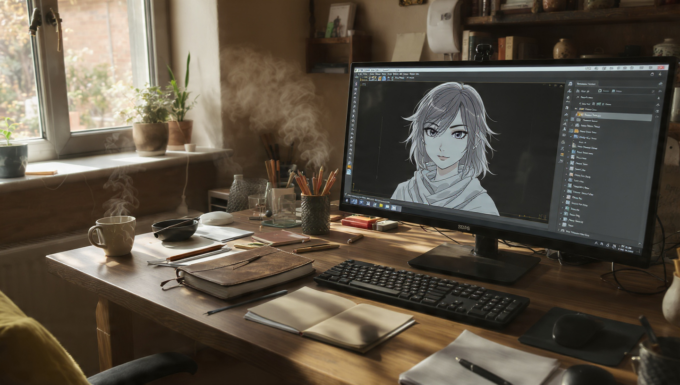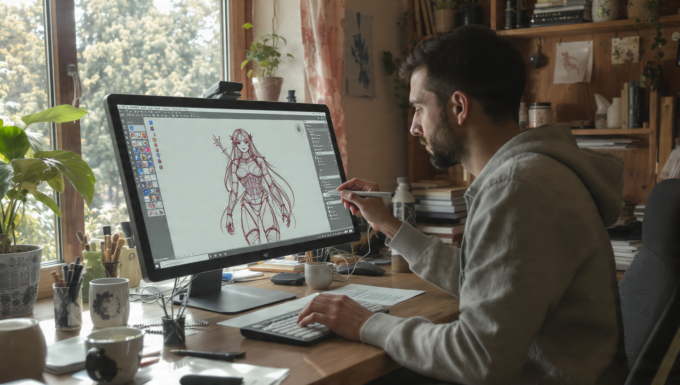

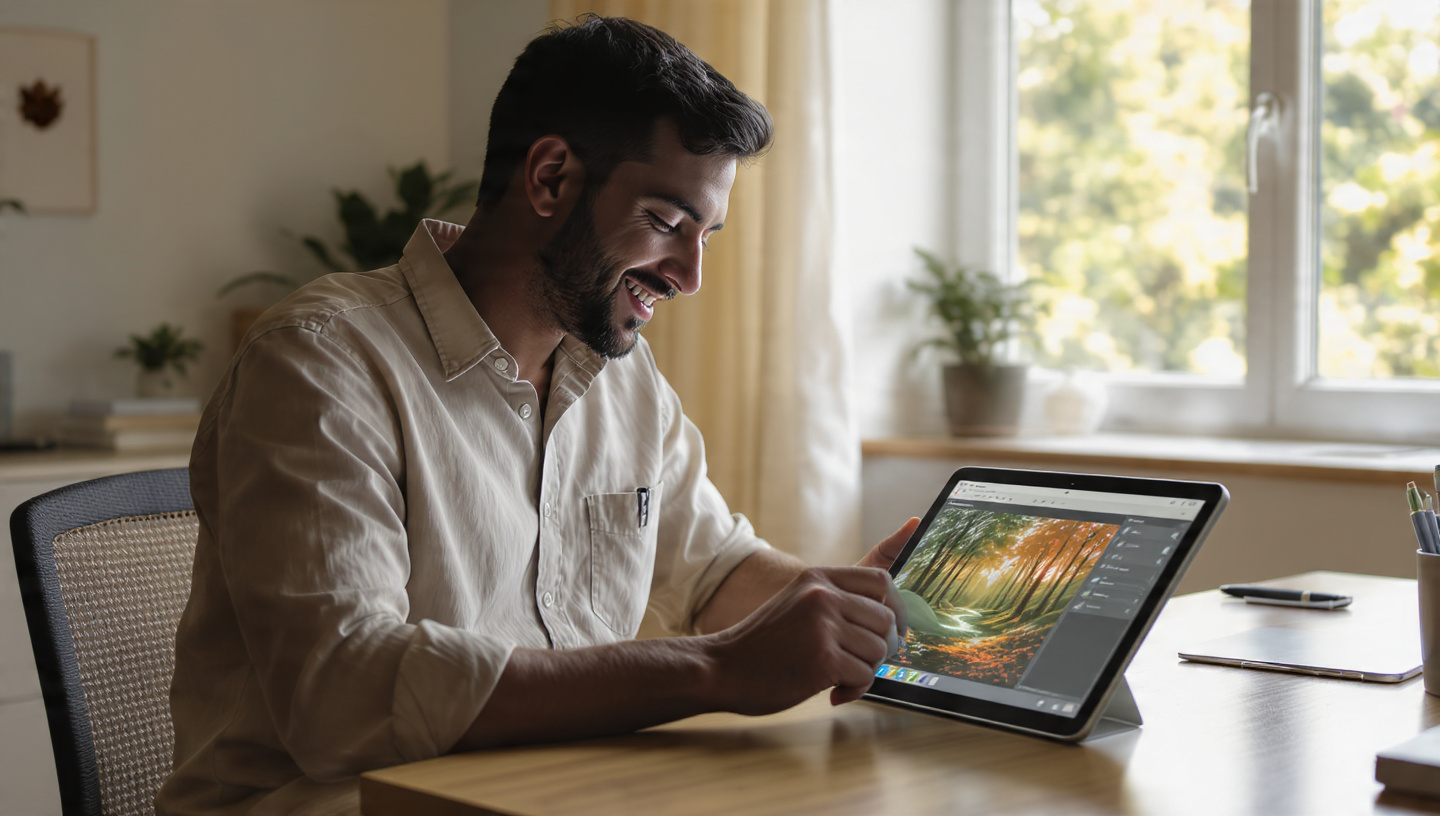
The most significant change in creative technology by 2026 is the disappearance of the “software barrier.” For decades, professional-grade creativity was guarded by steep learning curves—complex timelines, nested menus, and technical jargon. Today, the most popular tools have shifted toward Natural User Interfaces (NUI), where the technology adapts to how humans naturally think, speak, and gesture.
Intuitive AI tools in 2026 are defined by their ability to understand intent rather than just commands. They act less like a rigid instrument and more like a skilled creative partner that “speaks” your language, allowing you to move from an idea to a finished asset through simple conversation and intuitive play.
✨ AI Insight: In 2026, “intuition” in software is powered by Agentic Design, where tools like ChatGPT 5.2 and Gemini Ultra don’t just wait for prompts; they proactively suggest the next logical creative step based on your past preferences and current project context.
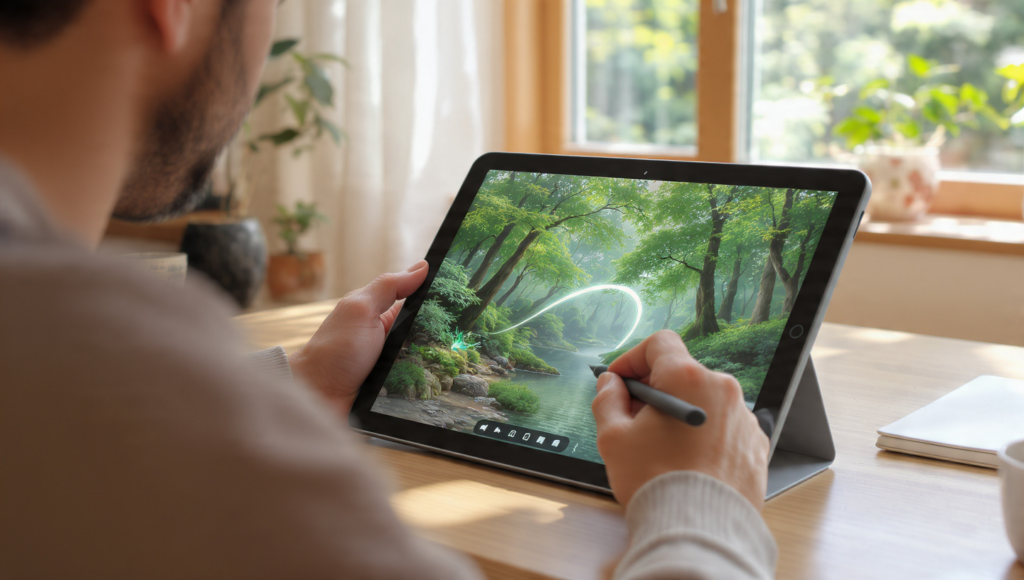
Visual Art: From Brushes to Intent
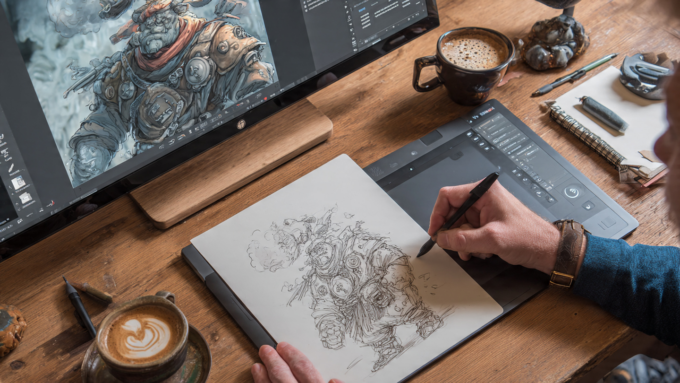
The shift in visual art has been from manual rendering to Strategic Curation. Tools today are designed to feel like an extension of your imagination rather than a technical hurdle.
- Adobe Firefly (Integrated): By embedding AI directly into the Photoshop and Illustrator workflows, Adobe has made advanced editing—like “Generative Fill”—feel as simple as highlighting a section of a photo and typing “add a sunset.” It respects your existing layers and brand tokens automatically.
- Midjourney (v7+): Known for its “artistic soul,” Midjourney has moved beyond Discord into a dedicated web interface that allows for intuitive “point-and-click” editing. You can now visually “pan” or “zoom” your canvas and use a brush to repaint specific details without rewriting a single line of text.
- Canva Magic Studio: For non-designers, Canva remains the gold standard for intuition. Its “Magic Switch” feature can instantly turn a presentation into a social media carousel or a blog post, handling all the resizing and reformatting automatically.
Video & Motion: Editing by Conversation
Video editing was once the most technically taxing creative field. In 2026, it has become as easy as editing a text document.
- Descript: Descript pioneered the “edit by transcript” model. If you want to cut a scene, you simply delete the text in the transcript. Its AI Eye Contact and Filler Word Removal fix production errors with one click, making professional video editing accessible to anyone who can use a Word document.
- Runway Gen-4: Runway has revolutionized cinematic effects through Motion Brushes. Instead of complex keyframing, you simply “paint” over the area of a still image you want to move (like a waterfall or hair in the wind) and the AI handles the physics of the motion.
- Kling AI & Luma Dream Machine: These platforms excel at “Image-to-Video” transformations that feel like magic. You upload a photo, and the AI “imagines” the next 10 seconds of movement with startling realism, perfect for rapid prototyping and storytelling.
Audio & Music: The Power of Sound-Thinking
Audio tools now allow creators to “shape” sound through emotion and description rather than just frequencies and sliders.
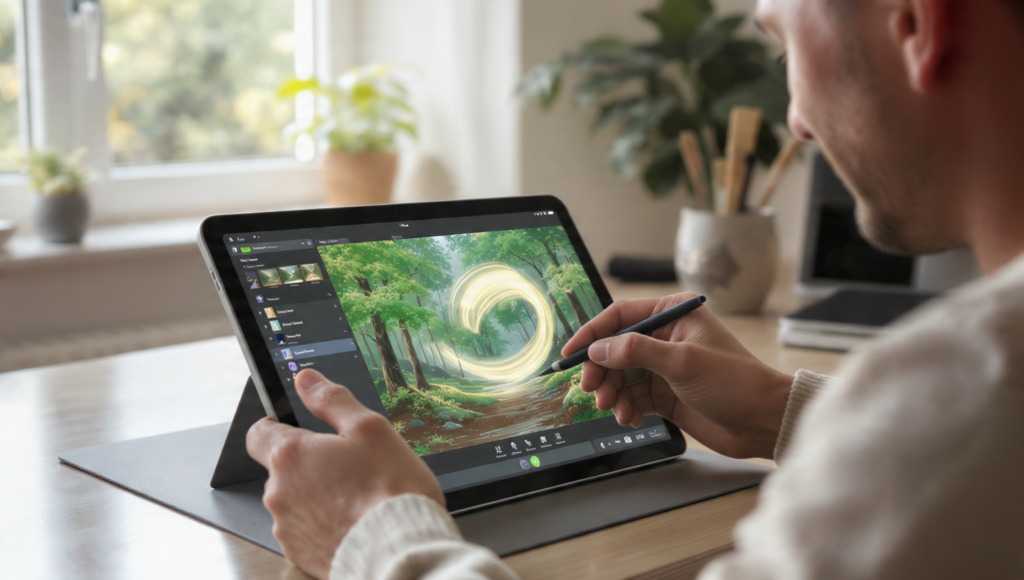
- ElevenLabs: For voice, ElevenLabs is the intuitive leader. Its interface allows you to “design” a voice by adjusting sliders for age, gender, and accent, or by providing a sample for instant, high-fidelity cloning that captures emotion and pacing.
- Suno & Udio: These tools have made music creation a “one-tap” experience. By describing a mood—”lo-fi beats for a rainy afternoon in a neon city”—the AI composes, performs, and masters a full track. It allows creators to find the perfect sonic backdrop without knowing a single note of music theory.
- Studio Sound (Ambient AI): Many recording apps now include “invisible” AI that automatically removes background noise and enhances your voice to studio quality in real-time, letting you focus on your message rather than your microphone settings.
Why It Matters
The rise of intuitive AI is ultimately about Democratizing the Human Spark. When the tools feel natural, the “technical tax” on creativity disappears. This allows for a more diverse range of voices to enter the creative economy, as the only barrier remaining is the quality of the idea itself.
In 2026, the most “skilled” creator is no longer the one who knows the most keyboard shortcuts, but the one who can most clearly articulate a vision and guide their AI partners to reach it.