
Marketing has traditionally been a discipline of high-volume output and constant manual adjustment. From drafting seasonal campaigns to analyzing shifting consumer sentiment, the work required to maintain a brand’s visibility can easily consume a team’s entire capacity, leaving little room for long-term strategic planning.
The arrival of integrated AI tools has introduced a shift toward “automated intelligence,” where the mechanical steps of marketing are handled by software that learns and adapts. These tools act as a silent partner in the creative and analytical process, allowing marketing efforts to become more precise, personalized, and efficient without increasing the workload.
✨ AI Insight: In 2026, marketing technology has evolved from simple automation into “autonomous ecosystems” that can adjust budgets and creative assets in real-time based on live performance data. This shift allows brands to react to market changes in minutes rather than days, making the marketing funnel more responsive than ever before.
Scalable Personalization for Every Interaction
One of the most persistent challenges in marketing is delivering a message that feels personal to thousands of individual customers at once. AI-powered personalization engines analyze billions of data points—including browsing history and past purchases—to tailor everything from email subject lines to website layouts for each user.
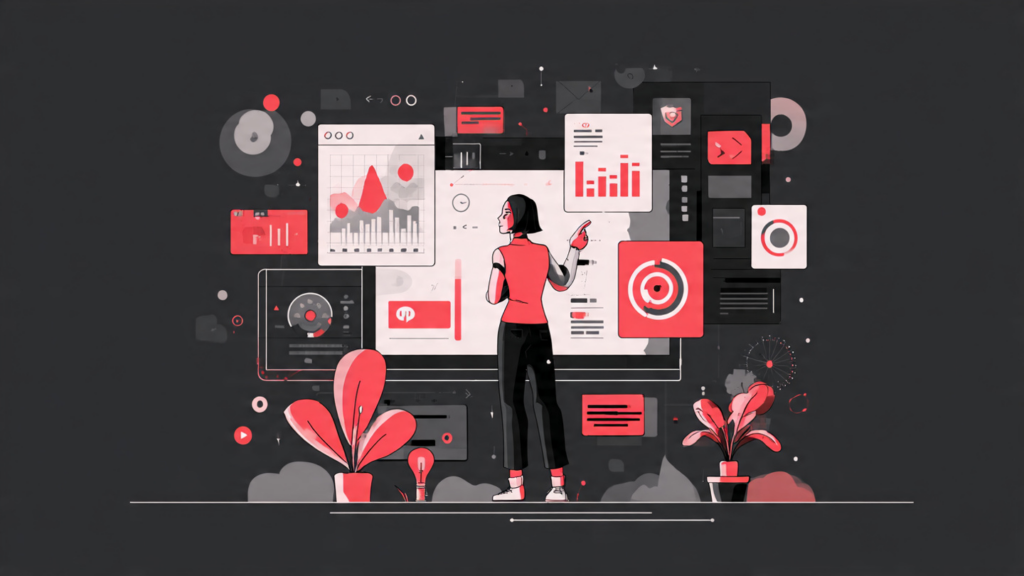
This “hyper-personalization” ensures that every touchpoint reflects the specific intent and preferences of the customer. By automating the delivery of relevant content, businesses can significantly increase engagement rates while building a deeper, more authentic connection with their audience.
The technology handles the complexity of managing these individual experiences in the background. This allows the marketing team to focus on the overarching brand narrative while the software ensures that the right version of that story reaches the right person at the optimal moment.
Creative Production and Asset Generation
The demand for fresh visual and written content is higher than it has ever been, often outpacing a team’s ability to create. Generative AI tools have stepped into this gap, acting as a “force multiplier” for creative departments by producing initial drafts of social media posts, ad copy, and even high-fidelity video clips.
These tools allow for rapid A/B testing, as a single concept can be transformed into dozens of variations to see which resonates best with different audience segments. This iterative process happens in a fraction of the time it would take a human designer to perform manually.
By skipping the “blank page” phase, creative professionals can shift their focus to higher-level direction and brand consistency. The AI handles the high-volume production, while the human ensures the final output aligns with the brand’s ethical standards and creative vision.
Predictive Analytics and Strategic Forecasting
Marketing strategy has historically relied on looking at past performance to guess at future trends. Predictive AI tools have moved this process toward foresight, utilizing machine learning to forecast customer behavior, churn rates, and even the potential success of a new product launch.
These analytics platforms can identify subtle patterns in consumer data that might be invisible to the human eye. This allows businesses to reallocate their advertising spend toward the channels and audiences most likely to convert, maximizing the return on investment.
When a team can see “around the corner” of a market trend, they can be proactive rather than reactive. This strategic advantage ensures that marketing efforts are always aligned with where the audience is going, rather than where they used to be.
Streamlining Social Media and Community Management
Managing a brand’s social presence involves a constant stream of posting, monitoring, and responding to community feedback. AI-driven social tools automate the scheduling process and use sentiment analysis to alert teams to rising trends or potential reputation risks.

Intelligent “social listening” tools can categorize thousands of mentions in real-time, identifying which conversations require a human response and which can be handled by automated, helpful bots. This ensures that the brand remains responsive 24/7 without requiring a massive team to monitor feeds manually.
This level of automation allows for a more consistent and active social presence. By delegating the monitoring to the software, social media managers can spend more time on community building and creating the high-impact content that truly drives viral engagement.
Real-Time Campaign Optimization and Bidding
In the world of paid advertising, the difference between a successful campaign and a wasted budget often comes down to minute-by-minute adjustments. Autonomous advertising systems now manage bidding and ad placements across multiple platforms simultaneously, optimizing for the best possible results.
These systems can pause underperforming ads and redirect funds to top performers instantly, removing the “human lag” that often leads to inefficient spending. They can even adjust the creative elements of an ad based on which colors or headlines are driving the most clicks in real-time.
This level of precision ensures that every marketing dollar is working as hard as possible. It transforms the role of the media buyer from one of manual entry to one of strategic oversight, where they set the goals and the AI manages the execution.
Enhancing SEO and Discoverability in a New Era
The way people search for information is changing, with voice commands and AI-driven answers becoming the norm. AI-powered SEO tools help marketers adapt by suggesting content structures and keywords that are optimized for how these new systems interpret the web.
These tools analyze the “intent” behind a search query rather than just the keywords, helping brands create content that is genuinely helpful and easy for search engines to surface. They can also perform deep site audits to identify technical issues that might be hindering a brand’s visibility.
By staying ahead of algorithm changes, these tools ensure that a brand’s content remains discoverable in an increasingly crowded digital space. It’s a smarter way to manage SEO that prioritizes clarity and authority over outdated “keyword stuffing” tactics.
Why It Matters
Integrating AI into marketing efforts is ultimately about efficiency and scale. When a brand uses technology to handle the repetitive and data-heavy parts of the job, it creates the “white space” needed for true innovation. This is where competitive advantages are built—in the creative ideas and human connections that software cannot replicate.
The result is a marketing department that is more agile, data-driven, and effective. By embracing these tools, businesses can move away from “guessing” what their customers want and toward a model of constant, informed improvement. It is a more sustainable way to grow that values the marketer’s time as much as the customer’s experience.
As we move further into 2026, the brands that thrive will be the ones that view AI not as a replacement for marketing talent, but as the engine that allows that talent to reach its full potential. The future of marketing is a partnership between human intuition and machine precision, working together to create a more relevant and engaging world for the consumer.