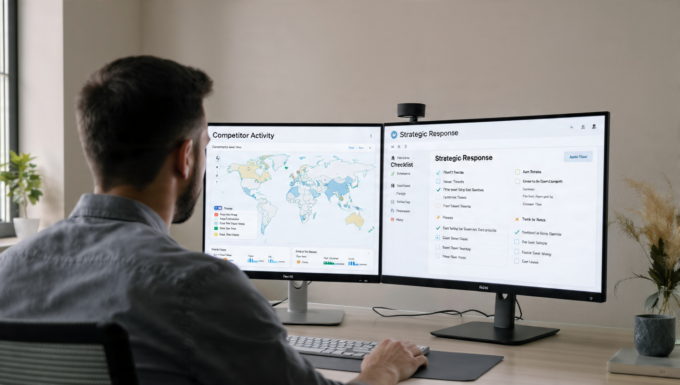

Marketing in 2026 has transitioned from a discipline of manual execution to one of strategic orchestration. The “heavy lifting” of the profession—once defined by hours of keyword research, repetitive copywriting, and manual data entry—is now being absorbed by integrated AI systems that work in the background of everyday browsers and platforms.
These tools do not replace the marketer’s vision; instead, they serve as a digital infrastructure that removes the friction from common workflows. By automating the mechanical aspects of promotion, technology allows the workday to focus on high-impact decision-making and creative direction rather than administrative maintenance.
✨ AI Insight: In 2026, marketing technology has moved from simple task-triggering to “living” campaigns that automatically test and refine headlines, visuals, and budgets in real time. This shift allows small teams to achieve a level of precision and scale that was previously only available to large agencies with massive dedicated staff.
The Evolution of Automated Content Creation
One of the most immediate shifts in the modern workday is the disappearance of the “blank page” problem. Generative AI tools like Jasper and Copy.ai have evolved into sophisticated brand partners that understand specific tone, style, and audience preferences.
Instead of writing a blog post or social caption from scratch, marketers now provide a few key parameters and receive high-fidelity first drafts in seconds. This allows for a much faster turnaround on campaigns, ensuring that a brand’s digital presence remains active and relevant without the usual time-intensive creative process.
Because these tools are trained on brand guidelines, the resulting content feels consistent rather than robotic. The role of the marketer has shifted to that of an editor and strategist, refining the AI’s output to add the authentic human experience that truly connects with readers.
Smarter Social Media and Community Management
Social media management has traditionally been one of the most fragmented and time-consuming marketing tasks. Tools like Sprout Social and Hootsuite now utilize predictive analytics to determine exactly when a specific audience is most active, automatically queuing content for those peak moments.
These systems also include sentiment analysis, which “reads” the emotional tone of comments and mentions across multiple platforms. This allows a team to instantly identify rising trends or urgent customer concerns, closing the gap between a trending topic and the brand’s response.
By delegating the monitoring of social feeds to an AI, managers can focus on building genuine communities. The software handles the scheduling and the sorting, while the human focuses on the real-time conversations that build long-term brand loyalty and trust.
Personalization Without Administrative Complexity
Delivering a truly personalized experience used to be a luxury for large enterprises, but AI has democratized this capability for businesses of all sizes. Platforms like Mailchimp and HubSpot now use predictive segmentation to send the right message to the right person at the optimal time.
This technology analyzes individual behavior—such as past purchases and browsing habits—to dynamically change email subject lines and product recommendations. It ensures that every customer interaction feels personally relevant, which significantly increases conversion rates and customer satisfaction.
The complexity of managing thousands of individual customer journeys is handled entirely by the software. This removes the “busywork” of manual list segmentation, allowing the marketing team to focus on the overarching strategy and the creative themes of their campaigns.
Real-Time Optimization of Advertising Efforts
In the fast-paced world of digital ads, the difference between a successful campaign and a wasted budget often comes down to minute-by-minute adjustments. Autonomous advertising systems like Albert.ai and Google Flow now manage bidding and ad placements across multiple channels simultaneously.
These systems can instantly pause underperforming ad variants and reallocate the budget to the highest-performing visuals or headlines. This removes the “human lag” that often leads to inefficient spending, ensuring that every marketing dollar is working as hard as possible.
This level of precision provides a transparent and predictive view of performance, drastically improving the financial efficiency of digital marketing. The marketer sets the goals and parameters, while the AI manages the complex execution and real-time optimization of the media buy.
Distilling Clarity from Marketing Analytics
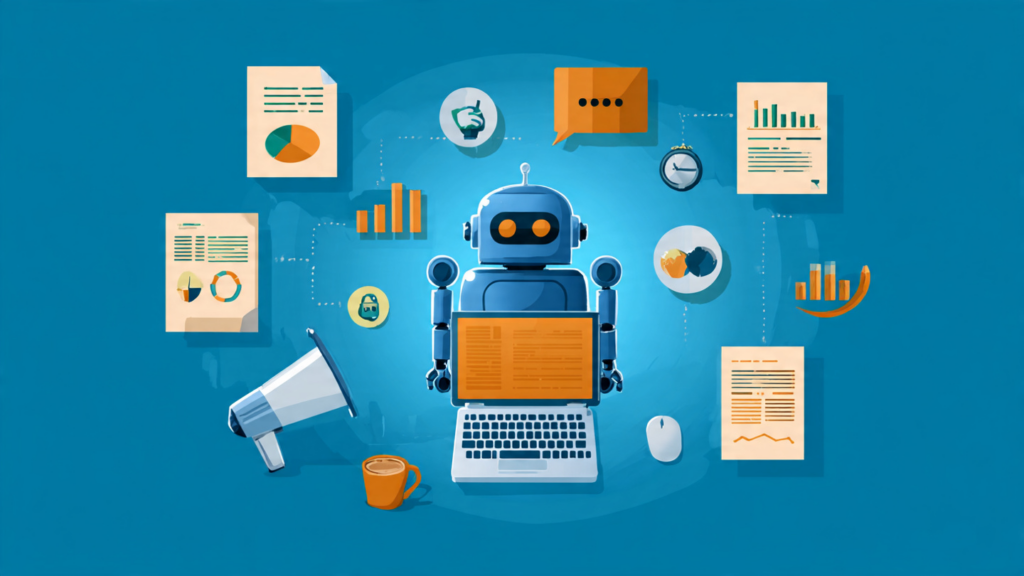
The sheer volume of data generated by modern campaigns—from click-through rates to social engagement signals—can easily lead to information overload. AI-enhanced dashboards now link the success of specific efforts to the tactics deployed, providing a clear picture of what is working.
Instead of spending hours buried in spreadsheets, marketers can now ask natural-language questions of their data and receive instant, visualized answers. These tools identify patterns and actionable insights that might be invisible to the human eye, reducing the guesswork in future planning.
This rapid orientation allows for a more agile marketing strategy that can pivot in response to real-world performance. It ensures that decisions are based on evidence rather than assumptions, leading to more accurate campaigns and a higher return on investment for the business.
Why It Matters
Simplifying marketing tasks is ultimately about reclaiming the human capacity for innovation and empathy. When technology handles the mechanical and repetitive aspects of the job, marketers gain the “white space” needed for deep thinking and the cultivation of unique brand identities.
A more streamlined workflow leads to higher job satisfaction and a significant reduction in the cumulative stress of digital maintenance. By choosing to integrate these tools, professionals are not just working faster; they are working in a way that is more sustainable, intentional, and focused on long-term growth.
As these AI systems continue to mature and become even more deeply embedded, the focus of marketing will continue to shift away from “doing” and toward “guiding.” The most effective marketing efforts of the future will be those where the technology handles the logistics so seamlessly that the brand’s human core can truly shine.