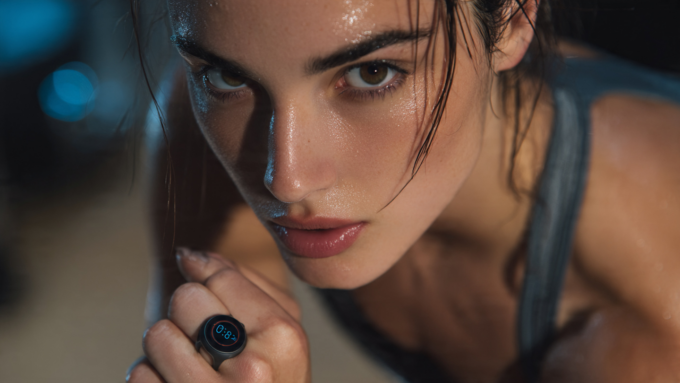


In the current landscape of wearable technology, the shift toward smart rings is primarily driven by a desire for a “discreet” and “invisible” health partner. For many, the ultimate luxury is a device that provides high-fidelity data without the physical or digital burden of a traditional smartwatch.
A ring that feels comfortable is one that you can effectively forget you are wearing. By utilizing advanced materials and ergonomic interior designs, modern fitness rings have achieved a level of “24/7 wearability” that allows for uninterrupted data collection through sleep, work, and exercise.
✨ AI Insight: Modern rings use “Thermal Fingerprinting” and recessed sensors to maintain a snug fit without pressure points, ensuring accurate data even during finger swelling.
The Engineering of a Weightless Experience
The most significant factor in comfort is the total weight and profile of the device on your finger. In today’s market, leading rings like the Ultrahuman Ring Air and Samsung Galaxy Ring weigh between 2.3 and 3.8 grams, making them feel nearly identical to a standard wedding band.
Manufacturers achieve this through the use of aerospace-grade titanium, which offers an exceptional strength-to-weight ratio. This allows the ring to be thin enough (often under 3mm) to avoid “finger splay,” where the surrounding fingers are pushed apart uncomfortably.
Ergonomic Interiors and Recessed Sensors
Early smart rings often had protruding sensors that could cause irritation or leave marks on the skin. Modern designs, such as those found in the Oura Ring 4, utilize recessed sensors and a smooth, seamless inner molding made of non-allergenic epoxy resin.
This “Comfort-Fit” interior ensures that the sensors maintain a steady connection with your digital arteries without creating pressure points. The lack of sharp edges or raised components makes the ring ideal for long-term wear, especially during the night when your hands naturally swell.
Material Science: Titanium vs. Ceramic
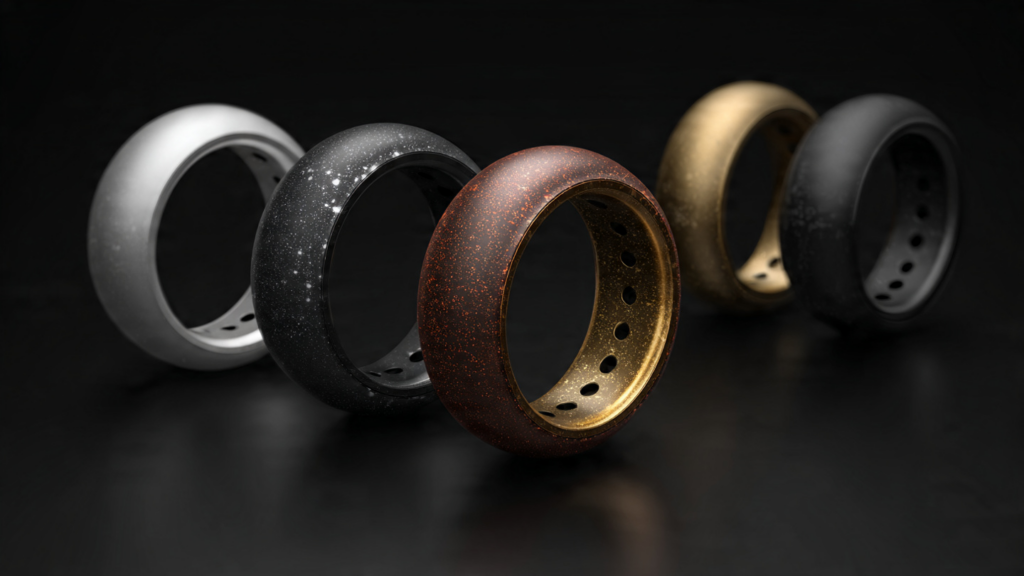
The choice of material plays a critical role in both the aesthetics and the skin-feel of the device. Titanium is the industry standard for its durability and hypoallergenic properties, ensuring it won’t react with sensitive skin even during heavy sweating or hand washing.
Some users prefer Ceramic or PVD coatings for their velvety smooth texture and high resistance to scratches. These materials are “cool to the touch” and provide a modern, minimalist look that blends perfectly with a professional wardrobe or high-end jewelry.
Precision Sizing for Accuracy and Ease
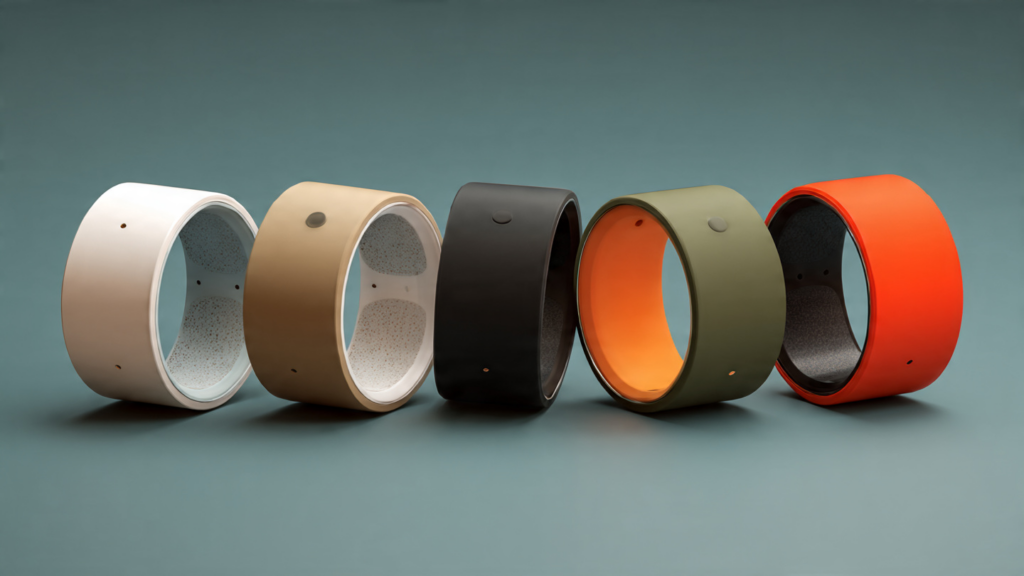
The most comfortable ring is one that fits perfectly, which is why brands now prioritize the use of Sizing Kits. Because fingers can change size throughout the day due to temperature and activity, users are encouraged to wear a plastic “trial ring” for 24 hours before making a final choice.
A well-fitted ring should be snug enough to stay in place during a workout but loose enough to slide over the knuckle with a slight bit of resistance. This perfect balance ensures that the device remains comfortable during exercise while maintaining the sensor contact needed for medical-grade data.
The “Silent” Companion: Life Without Vibrations
Beyond physical comfort, there is the concept of “digital comfort.” Many people rely on fitness rings because they lack screens and haptic motors, meaning the device never buzzes or lights up to demand your attention.
This “Passive Monitoring” approach reduces the mental load of wearing a digital device, allowing you to focus on your life while the ring gathers data in the background. It provides a sense of freedom from the “attention economy,” making the technology feel supportive rather than intrusive.
Closing the Loop on 24/7 Wearability
Ultimately, the goal of a comfortable fitness ring is to remove every barrier to continuous wear. When a device is this light and ergonomic, it becomes a permanent part of your biological dashboard, providing a complete 24-hour picture of your health.
This level of compliance is what makes the ring the definitive tool for tracking sleep architecture and recovery. By prioritizing the human experience of the wearer, modern rings have proven that the most powerful technology is the kind that you can’t even feel.