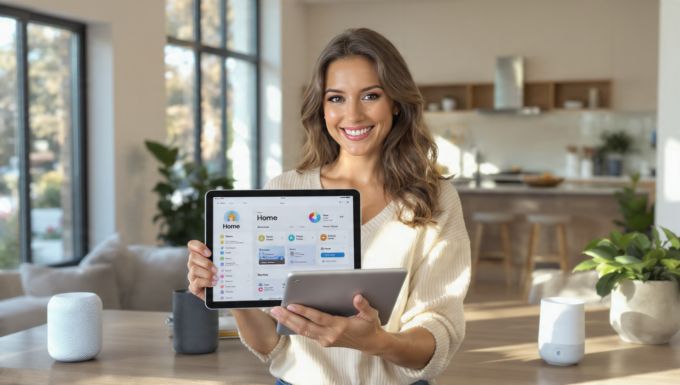


In 2026, the dream of a “seamless” smart home has finally moved past the era of endless troubleshooting. We have entered a period where technology is designed to be invisible, reliable, and deeply integrated into the physical structure of the home.
A setup that “actually works” is no longer defined by how many gadgets you own, but by how well they communicate. By focusing on a strong foundation and universal standards, you can create an environment that supports your lifestyle without requiring a constant technical intervention.
✨ AI Insight: In 2026, “Self-Healing Networks” automatically detect and resolve device interference, ensuring 99.9% uptime for your critical smart home routines.
Start with a Robust Network Foundation
The most common reason smart homes fail is not the gadgets themselves, but an inadequate Wi-Fi network. In 2026, a “set-it-and-forget-it” setup requires a high-performance Wi-Fi 6 or 7 mesh system to eliminate dead spots.

A robust network ensures that every sensor and camera has a stable path to the internet and your local hub. For larger homes, ceiling-mounted access points and Cat6 wiring provide the necessary bandwidth to handle dozens of simultaneous connections.
By prioritizing your network first, you prevent the frustrating “device offline” notifications that plague weaker systems. It turns your home’s digital infrastructure into a utility as reliable as the plumbing or electricity, providing a stable platform for all future additions.
Prioritize Matter and Thread Compatibility
In 2026, a smart home that “just works” is built on the Matter protocol and Thread mesh networking. These universal standards allow devices from different brands—like Apple, Google, and Amazon—to communicate locally and securely with near-zero latency.
Matter removes the need for proprietary bridges, while Thread creates a self-healing mesh that gets stronger as you add more devices. This combination ensures that your lights, locks, and sensors respond instantly to your commands, even if your internet connection goes down.
Choosing Matter-certified hardware is the best way to “future-proof” your setup and avoid the frustration of brand silos. It allows every member of the family to use their preferred app or voice assistant to control the exact same set of household devices.
Focus on High-Impact “Utility” Automations
The most successful smart home setups focus on practical automations that simplify daily tasks rather than flashy novelties. Start with Smart Thermostats and Automated Lighting that use motion and light sensors to adjust the environment based on your presence.
These “utility” setups provide a tangible return on investment by reducing energy waste and improving your comfort throughout the day. For example, your lights can slowly brighten with the sunrise, and your HVAC can dial back the moment the last person leaves the house.
By automating these basic functions, you remove the “mental load” of managing your home’s environment manually. It creates a space that feels proactively supportive, allowing you to focus on your work and family while the technology handles the background logistics.

Centralize Control with a Dedicated Smart Hub
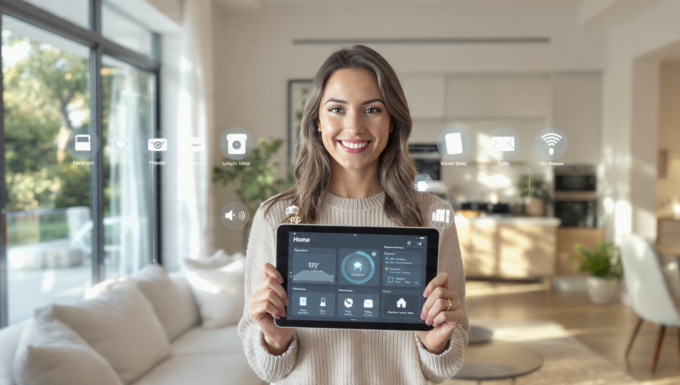
Even in a world of voice commands, a setup that actually works needs a physical, centralized command center. A dedicated Smart Hub or wall-mounted tablet provides a “single pane of glass” to monitor your home’s security, energy, and device health.
A hub like the Samsung SmartThings Station or Apple HomePod acts as the “brain” that coordinates your various Matter devices. It ensures that complex, multi-device routines—like a “Goodnight” scene that locks doors and dims lights—execute flawlessly every time.
Centralization also simplifies troubleshooting, as you can see the status of every device in one unified list. This level of organization prevents the “app-switching” fatigue and ensures that your smart home remains a source of convenience rather than a technical chore.
Invest in Professional-Grade Security Hardware
A reliable security setup is the cornerstone of any smart home, and in 2026, the preference is for wired power and local storage. Devices like the Google Nest Doorbell (Wired) provide 24/7 recording and instant alerts without the headache of battery swaps.
Wired hardware offers superior uptime and higher video resolution, which is essential for accurate facial and package detection. Pairing these cameras with a hub that supports encrypted local storage ensures your private footage stays off the cloud and under your control.
This combination of reliability and privacy is what makes a security system “actually work” for a modern family. It provides constant, high-fidelity monitoring that you can trust, giving you true peace of mind whether you are at home or halfway across the world.