
In 2026, the primary goal of a smart home is to simplify your life, not complicate it with endless apps and manual settings. A high-quality smart hub acts as the “brain” of your household, bringing order to the chaos of multiple devices.
By acting as a centralized command center, these hubs eliminate the need to juggle dozens of proprietary apps on your smartphone. They transform a collection of isolated gadgets into a cohesive ecosystem that works together to support your daily routines.
✨ AI Insight: In 2026, smart hubs use “Edge AI” to process your data locally, ensuring your home stays responsive and private even without internet.
Eliminating App Fatigue with Unified Control
The biggest frustration for homeowners has traditionally been the “app for everything” problem, where every light and lock requires a different interface. A smart hub solves this by providing a single, unified dashboard for every connected device in your home.
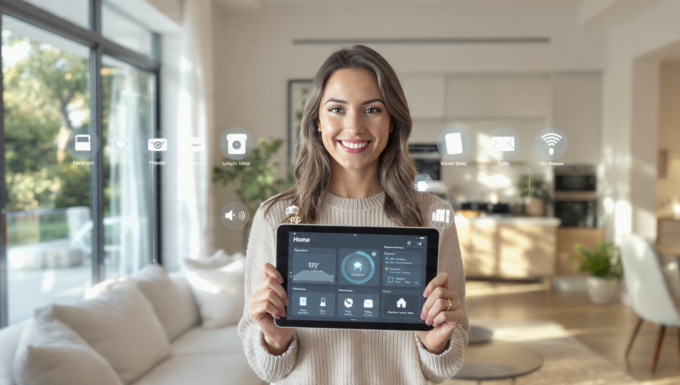
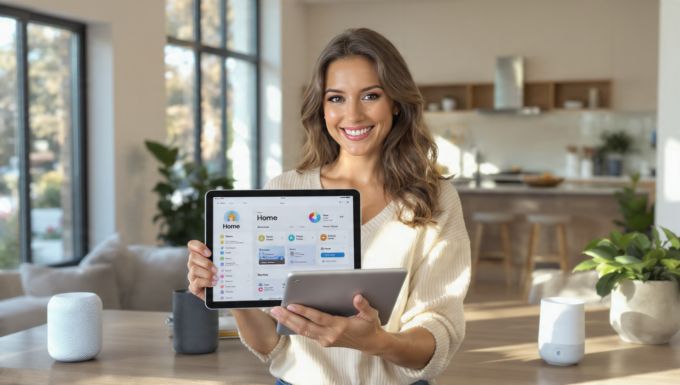
Whether you are using the Apple Home app, Google Home, or a dedicated tablet, the hub ensures every brand speaks the same language. This centralization allows you to monitor your entire home’s health, from battery levels to security status, in one place.
By consolidating these controls, you reduce the time spent searching for the right icon on your phone just to dim a light. It brings a sense of digital calm to your living space, making the technology feel like a helpful assistant rather than a technical burden.
Seamless Automation Across Multiple Brands
True complexity arises when devices from different manufacturers refuse to work together in a single automation sequence. A Matter-enabled smart hub breaks down these barriers, allowing a Philips light to trigger when an Aqara sensor detects motion.
This cross-brand synergy allows you to create “Scenes” that handle multiple tasks with one command, such as a “Leaving Home” routine. With one touch, your hub locks the doors, lowers the thermostat, and arms the security cameras across all brands.
When your devices can communicate freely, you no longer have to worry about whether a new gadget is compatible with your existing setup. The hub acts as a universal translator, ensuring that your home’s functionality grows as you add more technology.
Local Processing for Instant Reliability
Modern hubs in 2026 have moved away from “Cloud-only” processing, which often caused frustrating delays and system failures during internet outages. By processing your commands locally, these hubs ensure your home responds in milliseconds rather than seconds.
This local “Edge” architecture means that even if your Wi-Fi goes down, your motion lights and security alarms will continue to function. It provides a level of professional-grade reliability that makes the smart home feel like a natural part of the building.
The speed of local processing also improves the experience of voice commands, making the interaction feel more like a real-time conversation. This responsiveness is key to making technology feel truly integrated into your daily life rather than being a slow, clunky addition.
Simplifying Maintenance and Troubleshooting
Keeping a smart home running can be a chore, but smart hubs now offer predictive maintenance features to handle the technical heavy lifting. Your hub can monitor the health of your devices and notify you exactly which sensor needs a battery or a firmware update.
This proactive oversight prevents the “cascade of errors” that often occurs when one device in a complex system fails. By providing clear, actionable insights, the hub ensures that you spend your time enjoying your home rather than acting as its IT department.
In the event of a network issue, the hub can often diagnose and reset the connection automatically, saving you from manual resets. This self-healing capability is a major step forward in making advanced home technology accessible to everyone, regardless of their technical skill.
Enhancing Security with Unified Monitoring
Security is often the main reason people start a smart home, but managing multiple cameras and sensors can be overwhelming. A smart hub brings all your security data into a single, high-fidelity feed, making it easier to see what is happening across your property.
Instead of receiving separate notifications from five different apps, the hub filters these alerts to show you only what matters. It can coordinate your cameras, lights, and locks to create a “fortress” effect that deters intruders more effectively than isolated devices.
For example, if an outdoor sensor detects movement at night, the hub can automatically turn on all exterior lights and lock the front door. This level of coordination provides a much higher degree of protection and peace of mind for you and your family.
Optimizing Energy and Resource Management
A centralized hub is also the most effective way to manage your home’s energy consumption and reduce your monthly utility bills. By monitoring the power usage of every device, the hub can identify “energy hogs” and suggest more efficient settings or schedules.
In 2026, hubs can sync with your energy provider to run heavy appliances during off-peak hours when electricity is cheapest. This automation happens in the background, allowing you to save money and reduce your carbon footprint without any manual effort.
The hub can also manage smart blinds and thermostats together to maintain the perfect temperature using natural sunlight and shade. This holistic approach to climate control ensures maximum comfort while minimizing the strain on your HVAC system and your wallet.
Future-Proofing Your Living Space
Investing in a high-quality smart hub is the best way to ensure your home remains relevant and functional as technology evolves. Because modern hubs support universal standards like Matter and Thread, they are ready to incorporate the next generation of gadgets.
You no longer have to fear that your current devices will become obsolete when a new brand enters the market. The hub provides a stable foundation that allows you to expand your smart home at your own pace, adding new features as your lifestyle changes.
This longevity is what makes a smart hub a truly worthwhile investment for any modern homeowner. It turns your house into a high-performance environment that is prepared for the future, providing value that grows alongside the technology it controls.