
In 2026, the smart home has finally moved past the “walled garden” era where your light bulbs wouldn’t talk to your security cameras because they were from different brands. This revolution is powered by Matter, a universal communication standard, and the Smart Hubs that act as the brain of the entire operation.
A smart hub is no longer just a plastic box sitting on your shelf; it is the central nervous system of your home. By supporting the Matter protocol, these hubs allow devices from Apple, Google, Amazon, and Samsung to coexist in a single, unified ecosystem. This interoperability ensures that your home feels like a coordinated team rather than a collection of isolated gadgets.
✨ AI Insight: In 2026, the most advanced smart hubs utilize Thread Border Routers to create a self-healing mesh network, ensuring that if one device goes offline, the rest of your home stays connected and responsive.
The Role of Matter as a Universal Language
Matter is the “universal translator” of the smart home world. Before Matter, a Zigbee sensor couldn’t communicate with a Wi-Fi light bulb without a complex bridge. In 2026, any device with the Matter logo can speak the same language, regardless of who manufactured it.
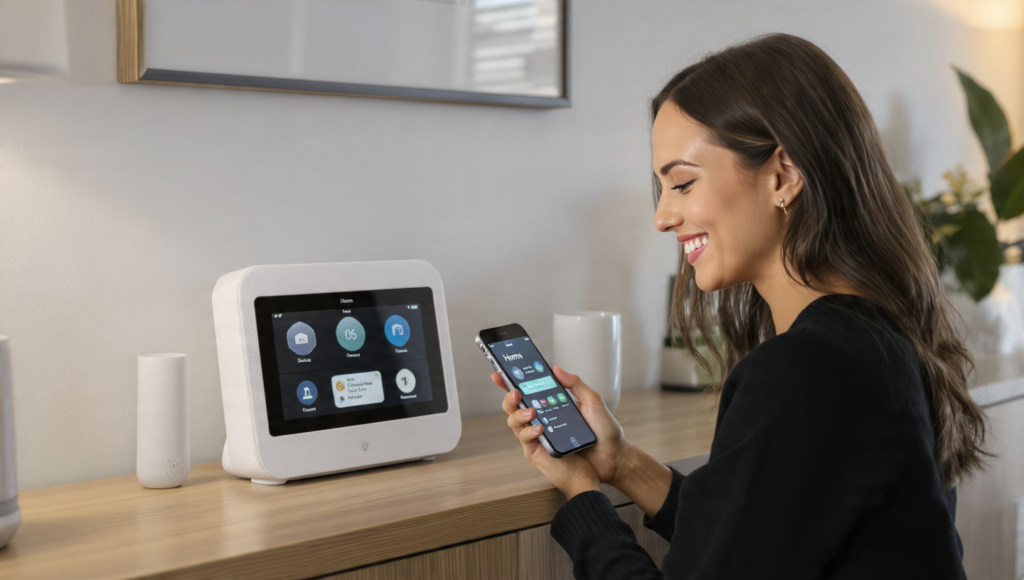
The smart hub’s primary job is to act as the Matter Controller. It manages the secure “fabric” of your home, ensuring that when you say “Goodnight,” the hub simultaneously tells your smart locks to engage, your thermostat to lower, and your lights to fade—even if those devices are from three different companies.
This shared language eliminates the need for a dozen different apps on your phone. You can set up a device using the Google Home app and still control it through Siri or an Amazon Echo, thanks to Matter’s Multi-Admin feature. It puts the power of choice back in the hands of the homeowner.
Centralized Control and Local Processing
One of the biggest reasons families invest in a smart hub in 2026 is for Local Control. Unlike older systems that relied entirely on the cloud, Matter-enabled hubs process most commands locally within your home network.
This means that if your internet connection goes down, your smart home doesn’t stop working. Your motion sensors will still trigger your hallway lights, and your pre-set routines will continue to run. This local processing significantly reduces latency, so your lights turn on the millisecond you walk into a room.
A smart hub like the Aqara Hub M3 or the Homey Pro also acts as a “bridge” for older technology. If you have legacy Zigbee or Z-Wave devices, these hubs translate those older protocols into Matter, allowing your existing investment to work seamlessly with the latest 2026 technology.
Building a Robust Mesh with Thread
While Matter is the language, Thread is the road that data travels on. In 2026, the best smart hubs include a Thread Border Router, which is essential for low-power devices like door sensors and smart locks that need to last for years on a single battery.
Thread creates a “mesh network” where every powered device—like a smart plug or a light switch—acts as a repeater for the signal. This extends the range of your smart home deep into the backyard or to the far corners of a large house without the need for Wi-Fi extenders.
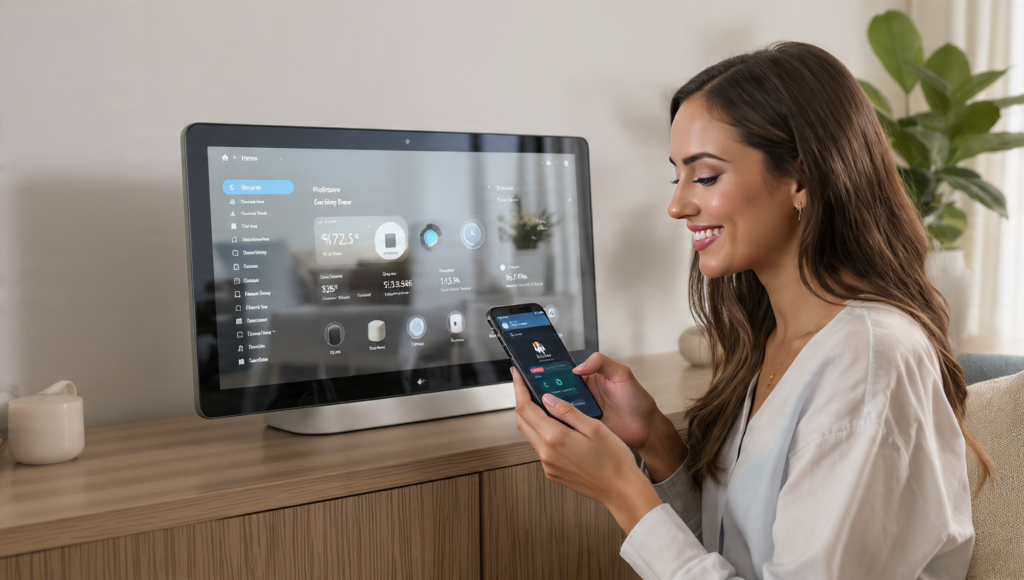
This decentralized structure makes the home more reliable. If a specific Thread-enabled light bulb is removed, the network automatically reroutes the signal through the next nearest device. The smart hub coordinates this mesh, ensuring a fast, low-latency connection for every gadget in the house.
The Psychological Benefits of a Unified Home
Beyond the technical specs, a unified home through a smart hub provides a significant psychological boost. By reducing the “mental load” of remembering to check every lock or turn off every light, the home becomes a true sanctuary of relaxation.
Automated routines help regulate your circadian rhythm by shifting light temperatures throughout the day, while integrated security sensors provide real-time reassurance that your property is safe. This proactive care allows you to focus on your family and your well-being instead of managing your hardware.
When your home “stops waiting for instructions” and starts interpreting your intent, the daily micro-frictions of life begin to disappear. Whether it’s the climate correcting itself as you enter a room or groceries being tracked automatically, the smart hub ensures that your home is always working for you.
Future-Proofing with Next-Gen Innovation
As we move deeper into 2026, smart hubs are evolving into Intent-Based Controllers. They no longer just respond to simple “On/Off” commands but understand complex requests like “Make the living room cozy for a movie.”
The integration of Generative AI allows the hub to coordinate lighting, sound, and temperature in ways that were previously impossible. This future-proof architecture ensures that as new technologies emerge, your central hub will be ready to incorporate them into your existing system.