
The traditional home was often defined by static, unchangeable lighting that served only a single functional purpose. In 2026, the transition toward smart lighting has shifted the focus from simple illumination to the creation of a dynamic, responsive atmosphere. By adjusting the color temperature and intensity of a room, homeowners can now instantly transform the psychological and aesthetic feel of their living spaces.
This evolution is centered on the concept of “Human-Centric Lighting,” which prioritizes the well-being of the inhabitants over the architecture itself. Smart systems allow a single room to serve multiple purposes—shifting from a high-energy workspace to a tranquil retreat with a single command. The home is no longer a fixed environment but a living space that breathes and changes alongside the people inside it.
✨ AI Insight: In 2026, smart lighting uses real-time biological feedback to adjust color tones, helping to stabilize your mood and improve sleep quality automatically.
Shifting from Static Utilities to Emotional States
The most immediate change smart lighting brings is the ability to influence the emotional “temperature” of a room. In 2026, people are moving away from the “one-size-fits-all” ceiling light in favor of layered systems that can evoke specific feelings.
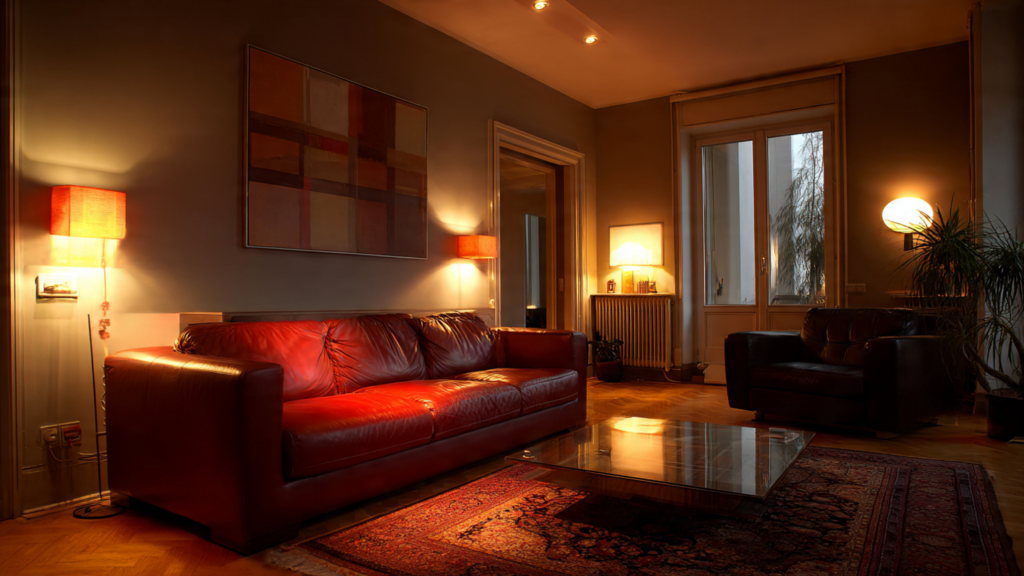
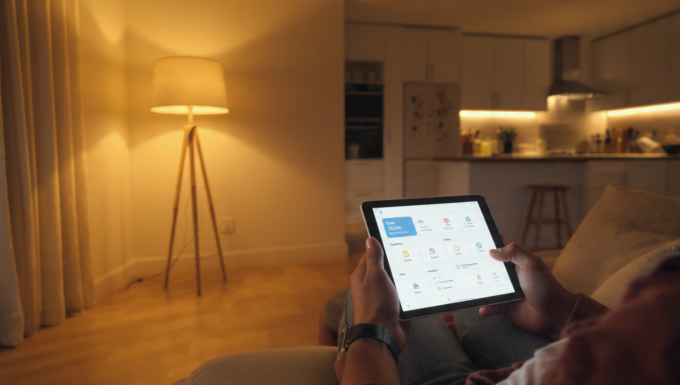
A room can be flooded with a crisp, cool white light during the day to encourage alertness and mental clarity. As the sun sets, those same fixtures can shift to a soft, golden amber that mimics candlelight, instantly signaling to the brain that it is time to relax and connect.
This transition is not just about aesthetics; it is about reclaiming the natural rhythm of the day within an indoor environment. By matching the indoor light to the outdoor cycle, smart systems help reduce the “clinical” feel of modern homes. The atmosphere becomes more organic, supporting a deeper sense of comfort and belonging.
Defining Zones and Architectural Character
Smart lighting is now used as a primary tool for “zoning” open-plan living spaces without the need for physical dividers. By highlighting specific areas—like a dining table or a reading nook—with different light temperatures, the system creates invisible boundaries.
This technique allows for “architectural grazing,” where smart LEDs are used to reveal the texture of stone walls, wood paneling, or artwork. It adds a sense of depth and drama that makes even a small apartment feel more sophisticated and intentional.
When light is used as a design element, the home office can feel completely separate from the living room, even if they share the same physical footprint. The atmosphere is shaped by what is illuminated, allowing the focus of the home to move where it is most needed at any given moment.
The Art of “Invisible” and Sculptural Integration
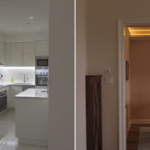
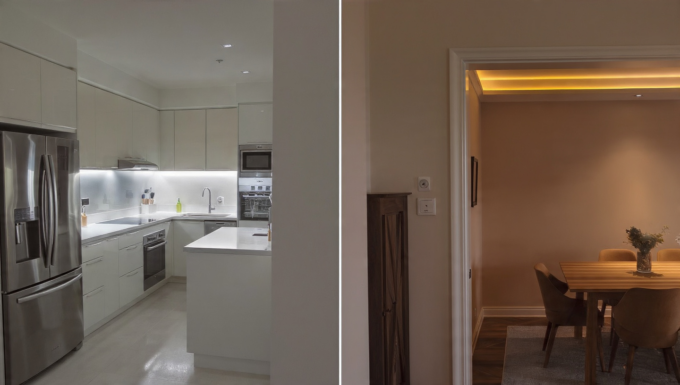
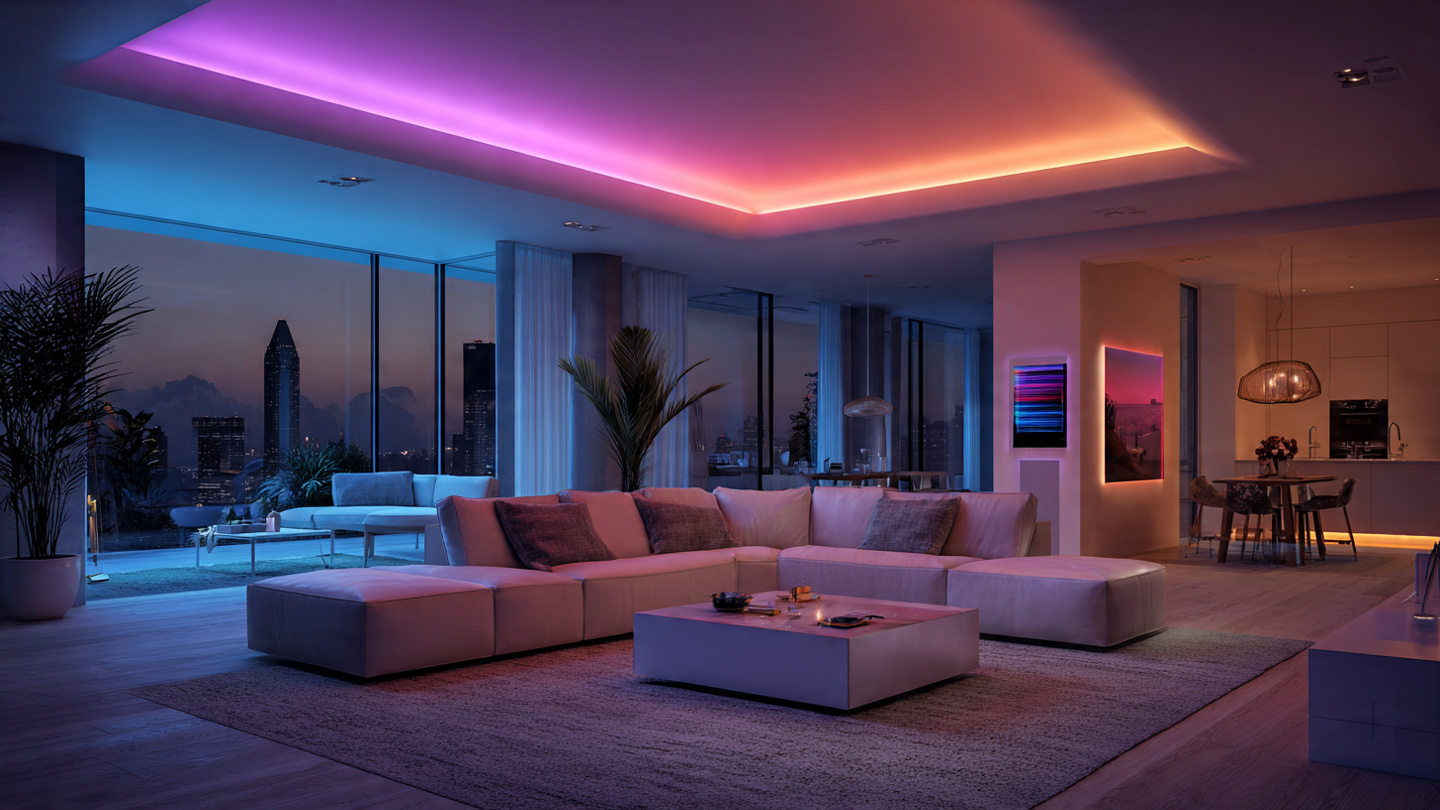
In 2026, the trend has moved toward “invisible” lighting, where the source of the glow is hidden within the architecture itself. Linear LED strips tucked into ceiling coves or behind skirting boards create a soft, ambient “wash” that makes walls appear to glow from within.
This creates a futuristic, clean atmosphere that eliminates the visual clutter of bulky traditional fixtures. The light feels like a natural part of the structure rather than an added appliance, contributing to a minimalist and tranquil environment that calms the senses.
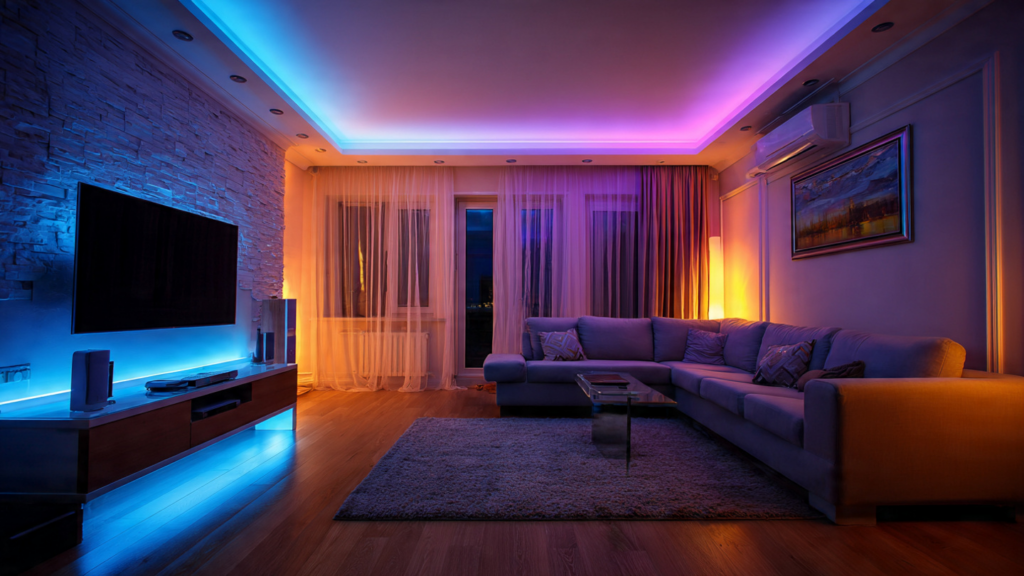
Conversely, for those who prefer a more maximalist look, smart statement fixtures are becoming central pieces of “light art.” These sculptural chandeliers can change their glow to match the season or a specific event, serving as a dynamic focal point that defines the room’s personality.
Syncing the Home with Daily Rituals
The ultimate transformation of home atmosphere occurs through the automation of daily rituals. In 2026, the “Atmosphere” of a home is a moving target that follows the family’s schedule, from the first light of morning to the final shutdown at night.
A “Dinner Scene” might dim the lounge lights and start a warm glow over the table, instantly shifting the household’s energy toward social connection. These transitions happen so smoothly that they become an intuitive part of the background, making the home feel more responsive.
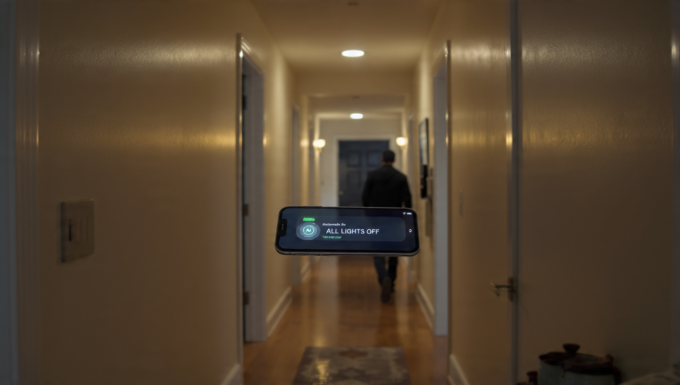
By removing the need for manual adjustments, smart lighting ensures that the atmosphere is always appropriate for the task at hand. It creates a sense of effortless luxury where the environment is perfectly tuned to the user’s needs, allowing for a more focused and peaceful lifestyle.