
In 2026, smart lighting has moved beyond simple novelty into highly practical configurations that solve everyday problems. People are increasingly choosing setups that require minimal manual interaction, relying instead on automation and sensors to manage their environments.
The most effective setups prioritize human-centric lighting and universal device compatibility that works across different brands. By focusing on how light affects our energy levels and safety, homeowners are creating spaces that are both efficient and comfortable.
✨ AI Insight: Smart lighting in 2026 uses ambient sensors to balance artificial light with natural sunlight, ensuring a perfectly lit room with zero energy waste.
The Circadian Morning Wake-Up Routine
The sunrise simulation is a popular setup for bedrooms because it addresses the universal struggle of waking up in a dark room. Instead of a loud alarm, smart bulbs in bedside lamps are programmed to gradually brighten over 30 minutes before your wakeup time.
This setup typically mimics a natural sunrise, starting with deep ambers and slowly transitioning to a bright, cool white light. This transition triggers the body to stop producing melatonin and start producing cortisol, making the wake-up process feel natural.
By the time the physical alarm goes off, the room is fully illuminated, which prevents the temptation to hit the snooze button. This setup is often paired with automated blinds that open simultaneously, maximizing exposure to natural light and setting a productive tone.
The Focused Productivity Home Office Mode
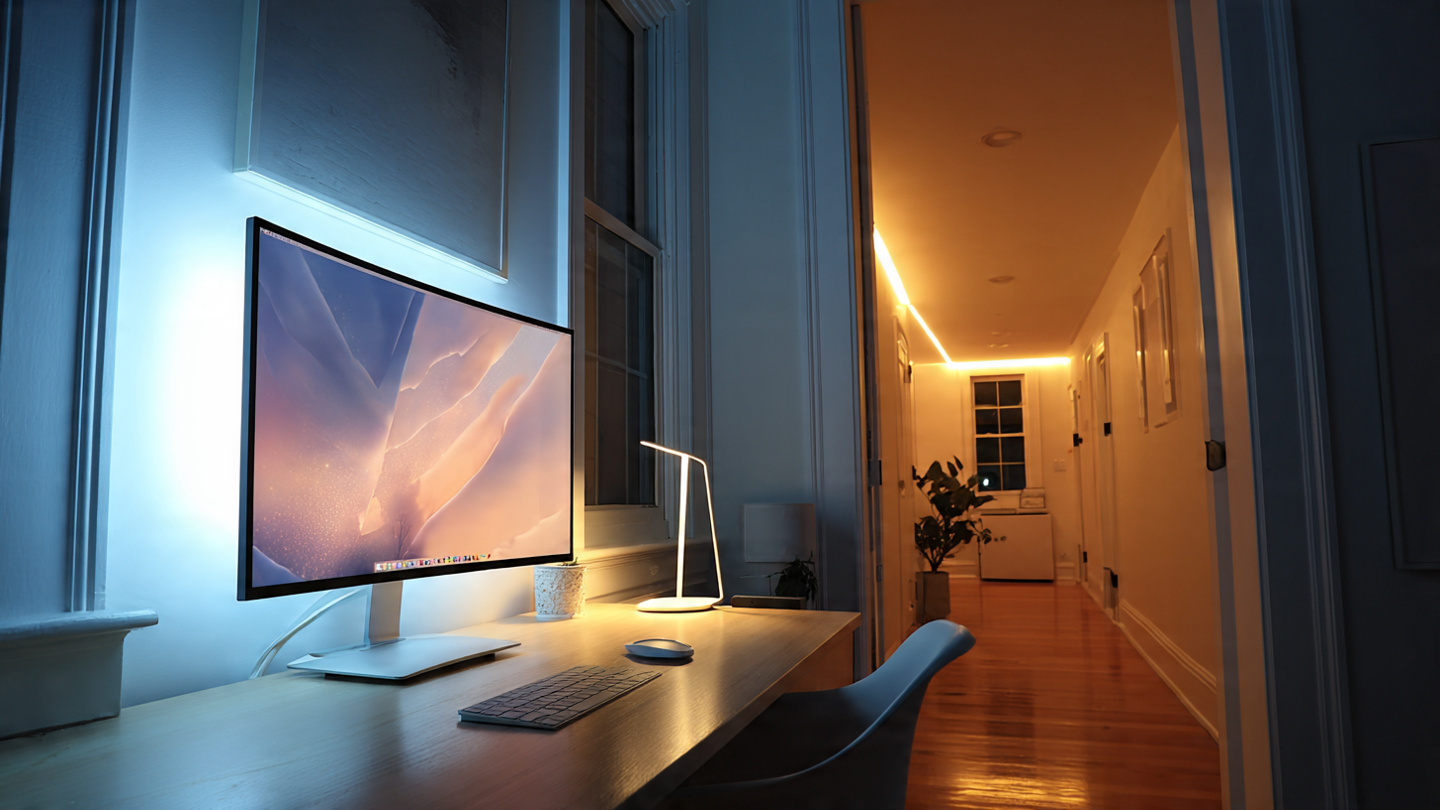
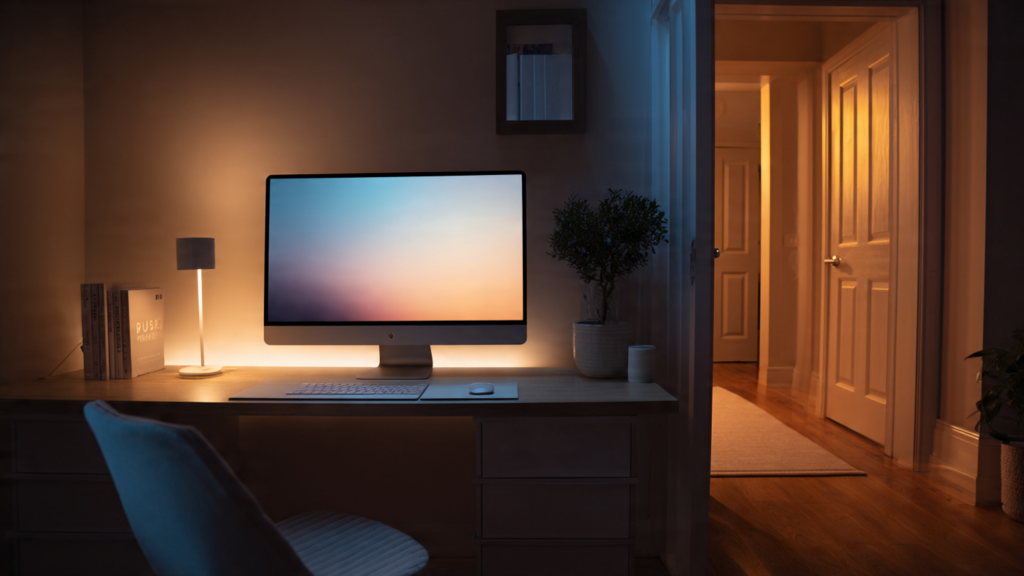
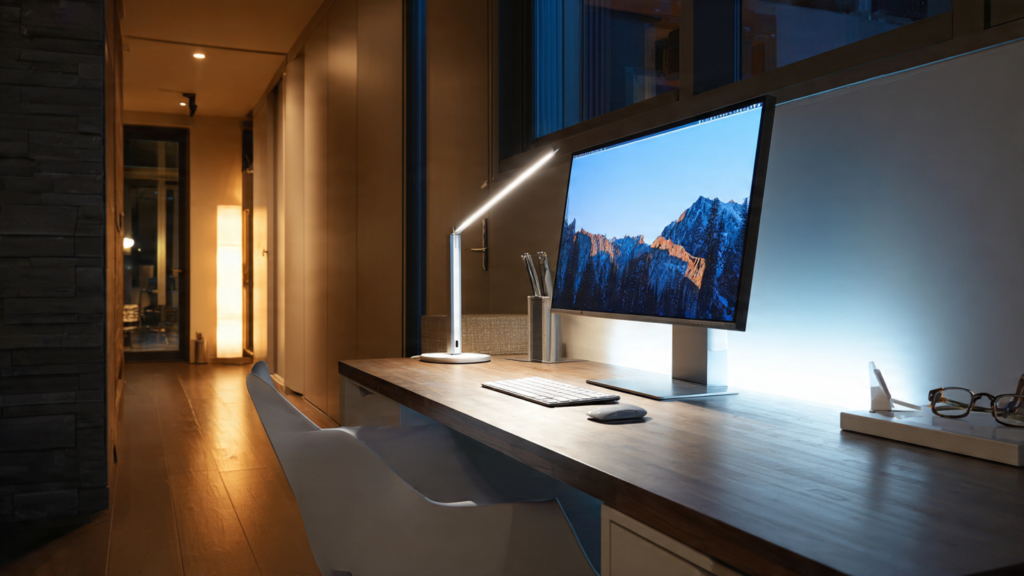
With hybrid work remaining a standard in 2026, dedicated office setups focus on reducing eye strain and maintaining concentration. The most common configuration involves a mix of task lighting on the desk and indirect ambient lighting placed behind the monitor.
This setup uses tunable white technology to provide a crisp, cool white light during peak working hours to increase alertness. The backlighting behind the monitor reduces the contrast between the screen and the wall, which significantly cuts down on headaches.
As the workday ends, people use specific scenes that automatically shift the light to a much warmer and relaxing amber tone. This serves as a psychological cue to disconnect from professional tasks and begin the mental transition into evening relaxation for better balance.
The Hands-Free Path and Safety Lighting
One of the most practical applications of smart lighting is the use of motion sensors in high-traffic areas like hallways. This setup ensures that nobody has to fumble for a switch in the dark, which is especially useful for families with small children.
In these transition zones, lights are typically set to turn on at full brightness during the day but very low brightness at night. This night path allows for safe navigation to the kitchen or bathroom without a harsh glare, making it easier to sleep.
Motion-activated lighting is also becoming the standard for utility areas like garages, walk-in closets, and crowded laundry rooms. These are spaces where people often have their hands full, making hands-free illumination a significant convenience that also prevents energy waste.
The Lived-In Simulated Security Scene
For home security, the away mode has evolved from simple timers into complex simulations of actual human activity patterns. Rather than turning all lights on at once, this setup staggers the activation of different rooms to mimic someone moving through the house.
Modern setups also integrate with smart doorbells and outdoor cameras to act as an active deterrent against any potential intruders. If a camera detects a person on the porch after midnight, the smart lighting can flash the porch light or turn on interior lights.
This proactive approach to security provides peace of mind that traditional static lighting simply cannot offer to the homeowner. Because the patterns are randomized and reactive to real-world triggers, it is much more difficult for intruders to tell if a house is vacant.
The Immersive Media Wall and Movie Night
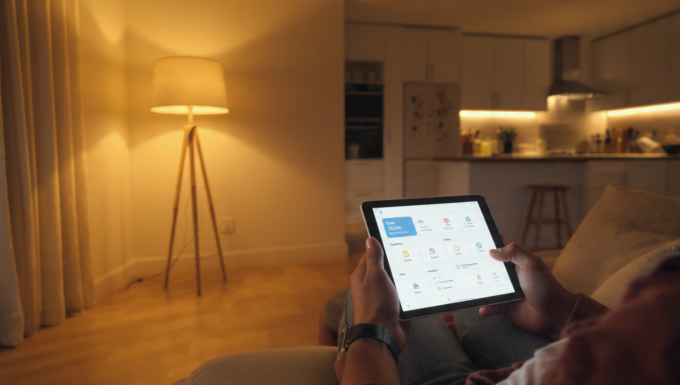
The movie night scene is the gold standard for living room setups, focusing on removing glare while enhancing the visual experience. This usually involves turning off all overhead lights and relying entirely on low-level accent lighting and LED strips behind the screen.
High-end setups now use screen syncing technology, where the LED strips behind the television change color in real-time. This expands the visual field and makes the viewing experience feel much more immersive and cinematic for everyone in the room.
This configuration is also popular for gaming setups, where the lighting can sync with in-game events like explosions or environment changes. It creates a highly engaging atmosphere that transforms a standard living room into a dedicated entertainment hub instantly.
The Energy-Saving Daylight Harvesting Setup
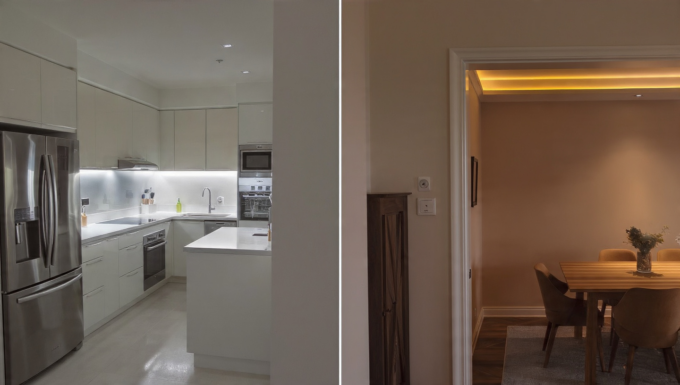
In 2026, energy efficiency is a primary driver for smart lighting, particularly through daylight harvesting in rooms with large windows. This setup uses ambient light sensors to measure how much natural sunlight is entering the room and dims bulbs accordingly.
If a cloud passes over and the room gets darker, the smart bulbs subtly increase their brightness to maintain a consistent level. This ensures that the room is always perfectly lit while using the absolute minimum amount of electricity required at any moment.
This setup is most commonly used in kitchens and open-plan living areas where natural light varies significantly throughout the day. It is an invisible automation that saves money on utility bills without the user ever needing to adjust a manual dimmer.
The Unified Goodnight Whole-House Sweep
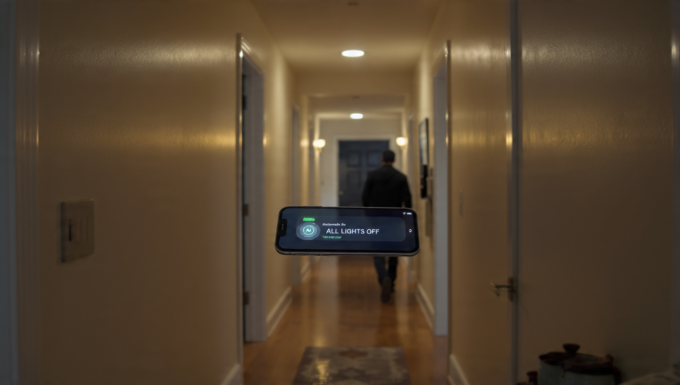
Perhaps the most satisfying smart lighting setup is the goodnight scene, which performs a digital sweep of the entire home. With a single command, the system ensures that every light in the house is turned off, except for the designated bedroom lamps.
This setup often integrates with other smart home categories, such as locking the front door and closing the smart garage. It removes the need for a final manual walk-through of the house to check switches, saving time and effort every single evening.
By automating the shutdown of the home, people reduce the cognitive load of their evening routine before going to bed. It provides a final, calming signal that the day is over and the home is secure, allowing for a peaceful transition.