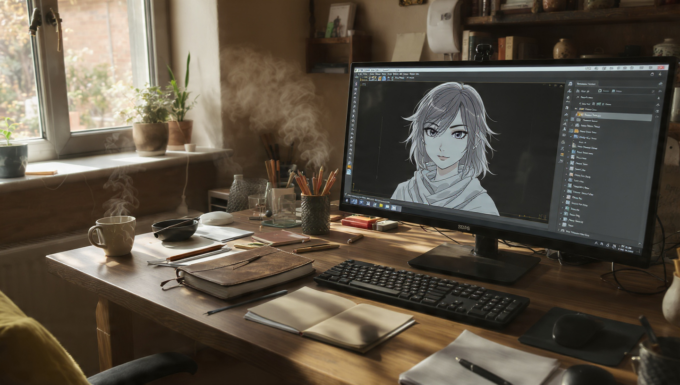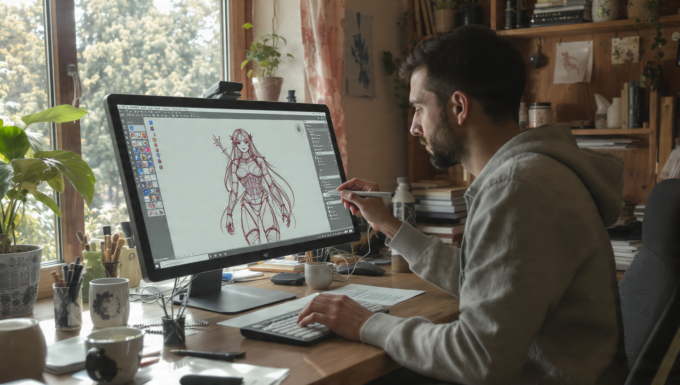

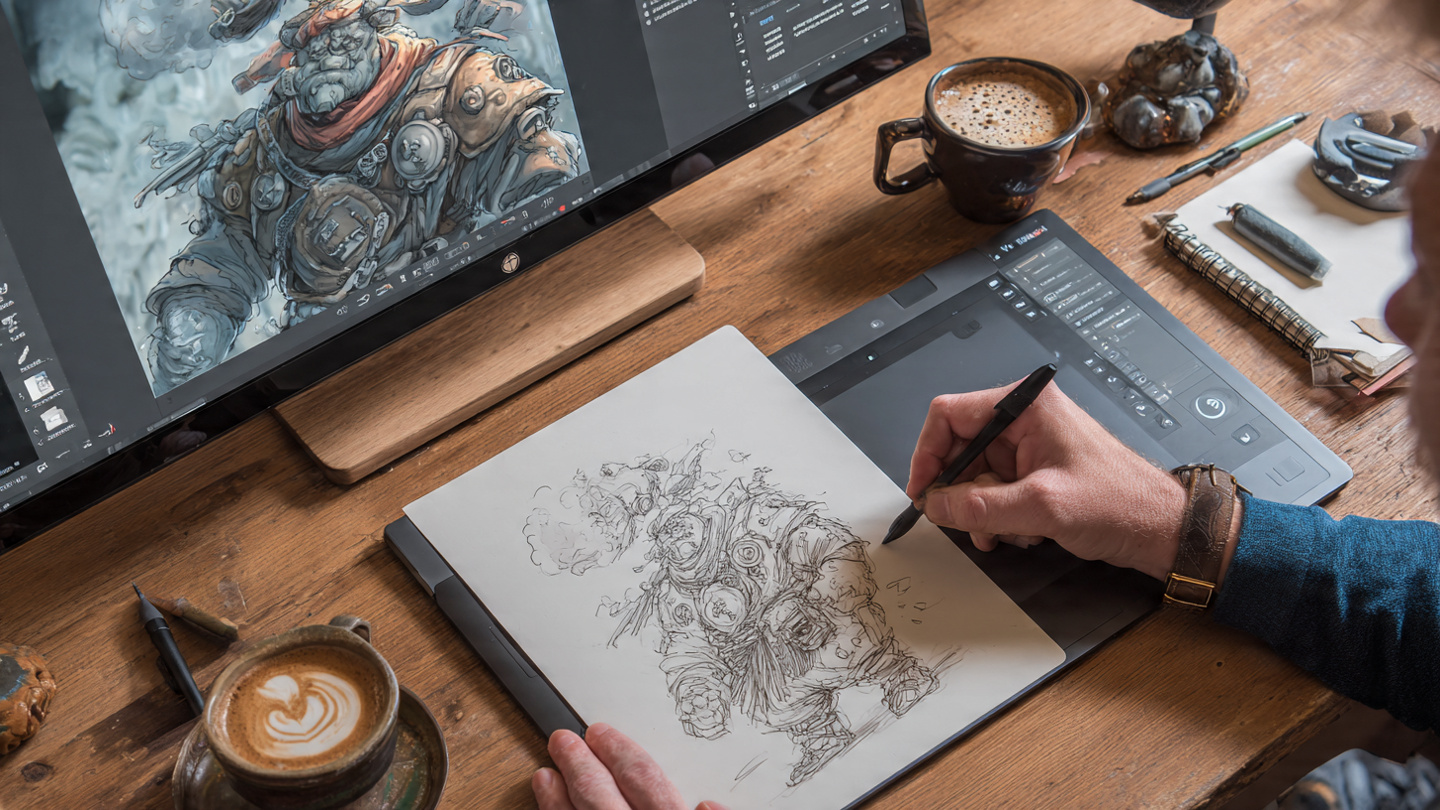
The creative process has undergone a fundamental shift in 2026. The traditional barrier between a mental concept and its final execution—often referred to as the “technical tax”—is rapidly dissolving. AI tools are no longer seen as a threat to originality but as a high-velocity bridge that turns a spark of inspiration into a tangible asset in seconds.
By automating the mechanical and repetitive aspects of production, AI allows creators to shift their focus from execution to curation. This transition is defining a new era where the most valuable skill is no longer just “how” to make something, but having the vision and taste to decide “what” should be made.
✨ AI Insight: In 2026, the rise of Agentic AI means tools are transitioning from passive assistants to active “co-workers.” These systems can now manage multi-step creative goals—such as taking a single character sketch and building a consistent 10-scene storyboard or a 30-second cinematic trailer—with minimal human intervention.
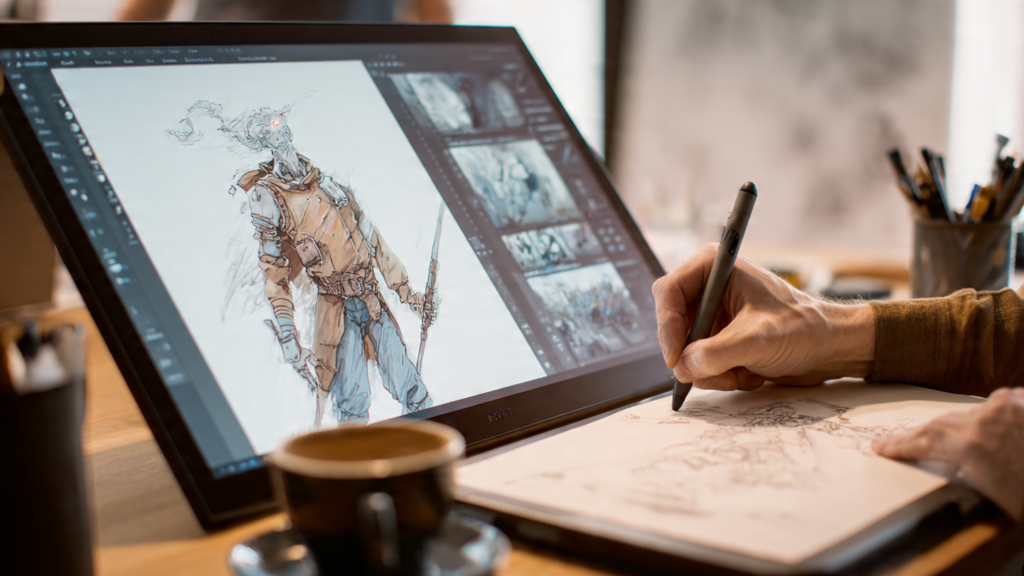
1. Dissolving the Friction of the Blank Page
The most daunting part of any project is the beginning. AI has become the ultimate “unblocker,” providing a running start that bypasses the hesitation of a blank canvas.
- Rapid Ideation: Tools like ChatGPT 5.2 and Claude serve as a collaborative sounding board, generating hundreds of plot twists, brand names, or concept outlines in seconds.
- Visual Prototyping: Designers use Midjourney and DALL·E to visualize “what-if” scenarios, exploring diverse lighting, textures, and moods before a single hour is spent on final design work.
- Style Exploration: Multimodal models allow you to feed in a piece of music, a reference image, and a text prompt to generate a cohesive visual direction that syncs all three.
2. Scaling “Impossible” Production Levels
In 2026, a solo creator or a three-person team can launch a global campaign that previously required a full agency. AI handles the logistical scaling of creativity.
- Cinematic Video at Home: Platforms like Kling AI, Sora, and Runway allow for high-fidelity scene generation, cutting production costs by up to 90% for indie filmmakers and advertisers.
- Automatic Personalization: AI can “atomize” a single video or article into dozens of platform-specific versions, tailored for different audience demographics without increasing the human workload.
- Consistent Characters & Worlds: New “consistency models” ensure that a character’s face, clothing, and environment remain identical across different images and videos, making AI-assisted graphic novels and films commercially viable.
3. The Power of “Intuitive Play”
The tools of 2026 are designed to feel like an extension of the human mind, prioritizing natural language and gesture over complex software menus.
- Edit by Conversation: Video editors now use Descript to cut scenes by simply deleting words in a text transcript. If you misspeak a word, the AI can “overdub” it in your own voice automatically.
- Motion Brushes: In tools like Runway, you don’t need to learn complex animation keyframes. You simply “paint” over the area of a still image you want to move—like clouds or water—and the AI applies realistic physics.
- Neural Filters: Professional photo editing has shifted to intent. A photographer can ask Adobe Firefly to “make this forest look more eerie and damp,” and the system adjusts lighting, fog, and saturation in one non-destructive layer.
4. Reclaiming the “Human Spark”
Perhaps the most significant benefit of AI in 2026 is the reclamation of mental white space. By transferring “grunt work” to the machine, creators have more time for what truly matters.
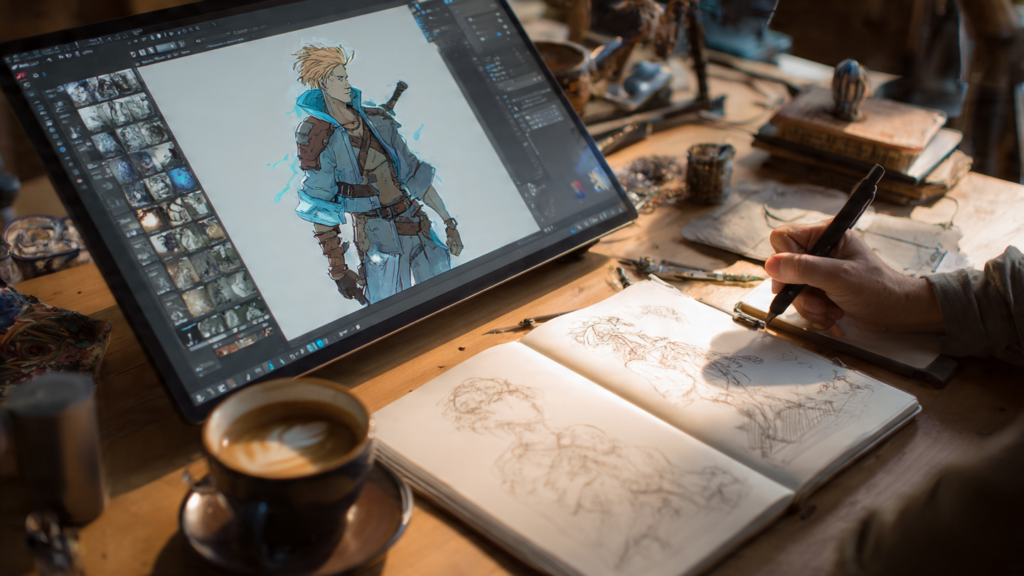
- Emotional Resonance: Teams spend less time on background removal and more time on the storytelling that connects with their audience.
- Strategic Thinking: Designers shift from being “pixel pushers” to “experience architects,” focusing on the user journey and brand philosophy.
- Risk-Taking: Because the cost of an “experiment” is now near zero, creators are taking bigger risks with surreal visuals, unconventional narratives, and cross-genre music.
Why It Matters
AI is not replacing the creator; it is amplifying the human role. In 2026, the digital landscape is being flooded with “AI slop”—generic content made with a single click. The creators who stand out are those who use AI to build a massive foundation, but then add the human finish: the cultural nuance, the personal story, and the intentional imperfections that machines cannot mimic.