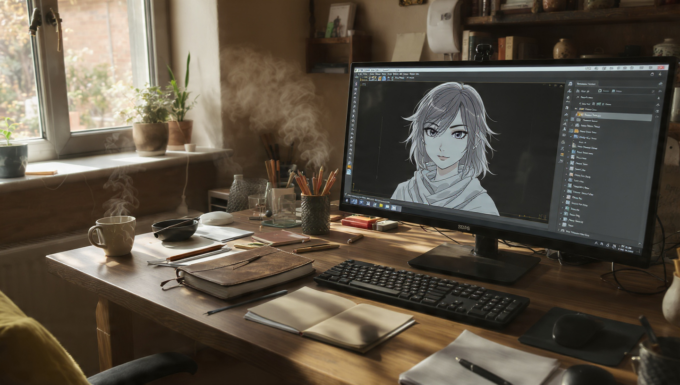

The most daunting moment for any creator is standing before a blank canvas, a silent timeline, or an empty document. For years, the “spark” of inspiration was seen as an unpredictable force that could only be waited for. Today, that dynamic has changed as creative AI tools transition from simple execution engines into active partners in the brainstorming process.
These tools are not intended to replace the human imagination but to act as a digital catalyst. By providing unexpected associations, visual prototypes, and structural outlines, they help dissolve the friction of getting started. This shift allows the creative workday to move quickly past the initial block and into the more meaningful phase of refinement and personal expression.
✨ AI Insight: In 2026, creative inspiration has been enhanced by “latent space exploration,” where AI tools suggest conceptual bridges between unrelated fields. This allows creators to visualize “impossible” combinations, turning a vague curiosity into a tangible aesthetic direction in a matter of seconds.
Dissolving the Friction of the Blank Page
One of the primary reasons creators are adopting AI is its ability to generate high-fidelity starting points. Tools like Midjourney or Jasper are increasingly used to create “mood boards” or conceptual outlines that serve as a visual and structural foundation. Instead of waiting for inspiration to strike, a creator can input a handful of abstract keywords and receive a gallery of diverse interpretations.
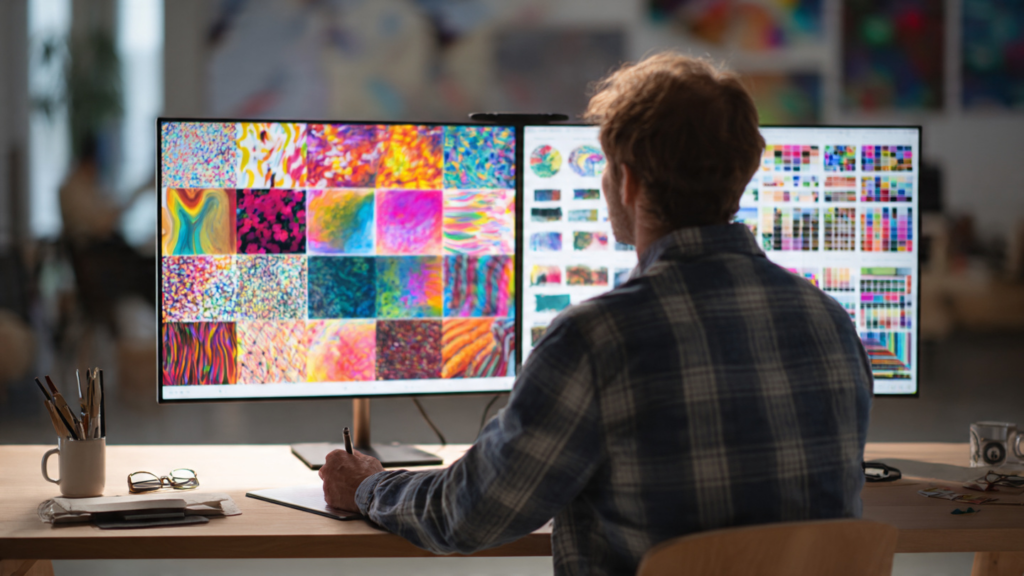
These early outputs act as a mirror for the creator’s own taste. By seeing what the AI generates, the artist can instantly identify what resonates and what does not, effectively “editing” their way toward a final vision. This process turns the lonely act of ideation into a collaborative dialogue, where the technology provides the raw materials and the human provides the creative judgment.
By shortening the distance between an idea and its first visual or written form, these tools maintain the momentum of the creative spirit. When a concept can be prototyped instantly, the fear of “wasting time” on a bad direction disappears, leading to a much more adventurous and experimental approach to daily work.
Visualizing the Impossible Through Generative Play
Creative AI thrives on the edge of the surreal, often combining textures, lighting, and subjects in ways that a human might not instinctively consider. Photographers and digital artists use these tools to experiment with “what-if” scenarios—such as imagining a 1920s aesthetic applied to a modern city or visualizing a landscape made entirely of glass and water.
This sense of play is essential for innovation. By seeing these “impossible” visuals, creators are often inspired to rethink their own traditional methods or explore new color palettes and compositions. The AI serves as a window into a vast library of aesthetic possibilities, expanding the creator’s mental toolkit beyond their own lived experiences.
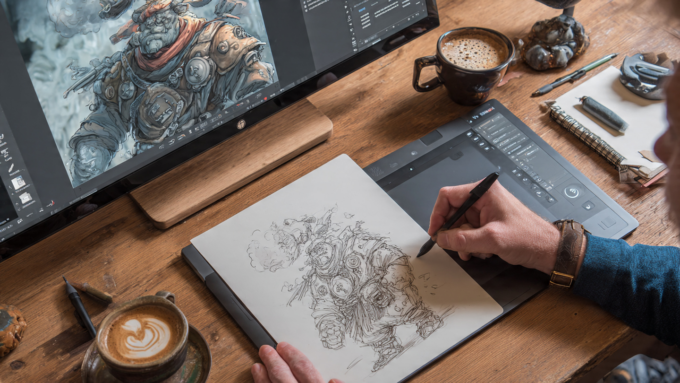
This experimentation often leads to the discovery of entirely new styles. When a creator takes an AI-generated anomaly and refines it through their own manual skill, the result is often something that feels fresh and authentically human. It is a process of “remixing” the digital and the physical to find something that has never been seen before.
Mapping Narrative Structures and Soundscapes
Inspiration is not limited to visuals; it is equally vital in writing and audio production. Writers use AI to map out complex narrative arcs or to simulate dialogue between characters, helping them identify plot holes or missed emotional beats. These tools act as a sounding board, providing a structural safety net that allows the author to take bigger risks with their storytelling.
Similarly, in the world of audio, AI tools allow musicians to generate ambient soundscapes or rhythmic patterns that can be used as a foundation for a new track. By hearing a generated melody, a composer might find a specific hook or chord progression that sparks a full symphony. It is a way of “fishing” for ideas in a sea of mathematical probability.
These systems understand the underlying patterns of music and language, allowing them to offer suggestions that are technically sound but often creatively surprising. This allows the creator to focus on the “soul” of the piece—the lyrics, the emotion, and the message—while the software provides the harmonic or narrative scaffolding.
Why It Matters
Using AI to inspire new ideas is ultimately about expanding the boundaries of what is possible for a single person to achieve. When we use technology to break through creative blocks, we are reclaiming our time for the deep, focused work that truly matters. This ensures that the digital world remains a place of genuine growth rather than a cycle of repetitive patterns.
This partnership between human and machine leads to a more diverse and vibrant cultural landscape. By making inspiration more accessible, these tools allow people from all backgrounds to share their unique visions with the world. It is a more inclusive way to build the future of art and media, where the strength of the idea is the only real currency.
As we move further into 2026, the most successful creators will be those who treat AI as a constant companion in their quest for the new. The goal is not to let the software do the thinking, but to use its power to amplify the human spark. Inspiration is the fuel of progress, and with these tools, the tank is always full.